Showing posts with label ted kennedy. Show all posts

Monday, May 14, 2018

An Essay on the Chappaquiddick Incident

Ted Kennedy, circa 1970.


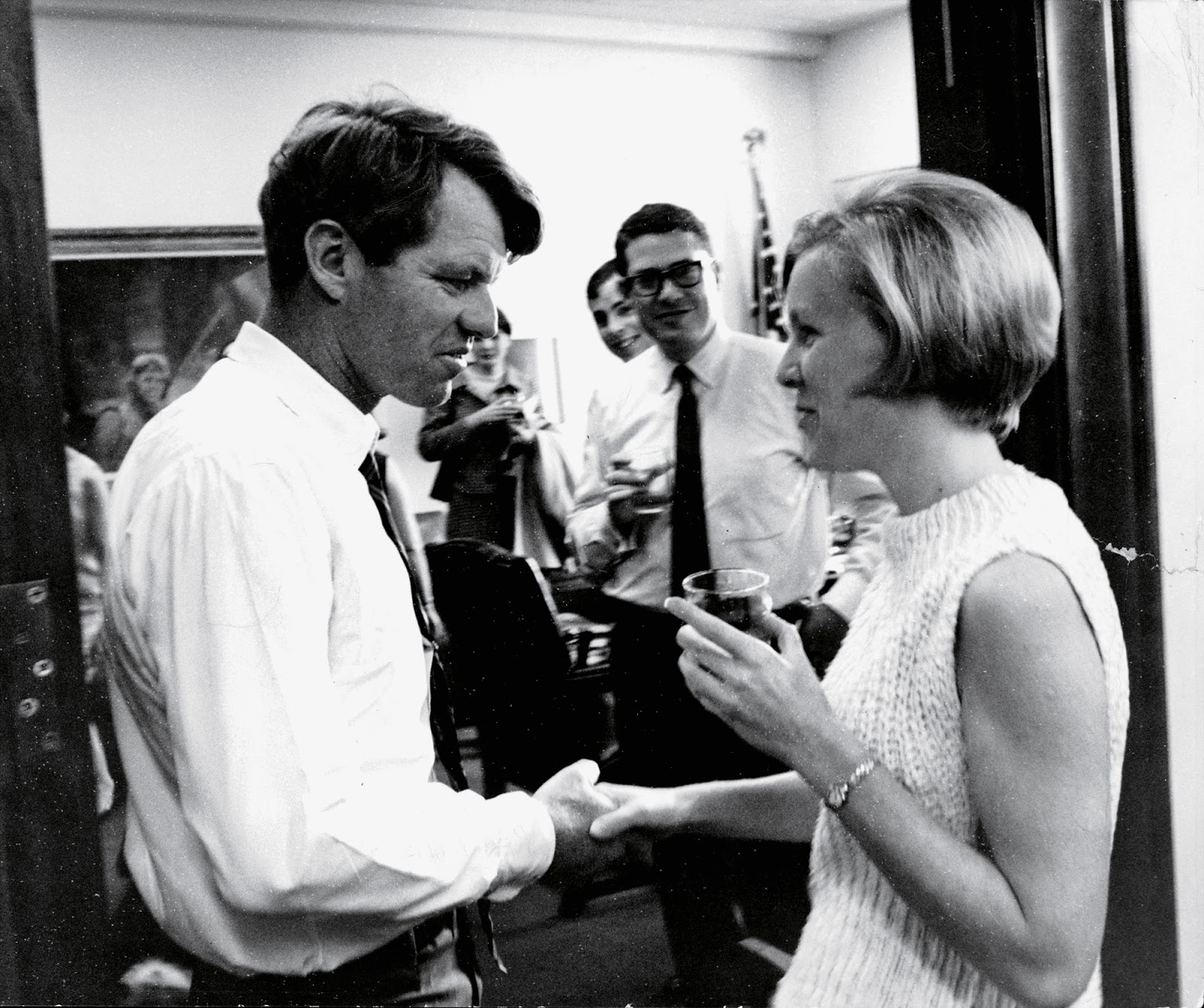
Bobby Kennedy and Mary Jo Kopechne, circa 1968.

Ted Kennedy's Oldsmobile after it had been pulled out of Poucha Pond, July 19, 1969.
After seeing the movie Chappaquiddick, I wanted to dig more deeply into the actual Chappaquiddick incident itself. I did the same thing several years ago after reading Joyce Carol Oates’ fictional treatment of Chappaquiddick, Black Water. Rather than burden my review of Chappaquiddick with superfluous detail about the historical event, I thought it would be better to simply write a separate essay. 

Because presumably the only witnesses to the accident itself were Ted Kennedy and Mary Jo Kopechne, who are obviously both dead, we will never know with true certainty what actually happened. Also, because the accident was, at best, sketchily investigated at the time, many key questions went unanswered. 

Ted Kennedy sailed in the Edgartown Yacht Club Regatta on Friday, July 18, 1969. Later that evening, a party was held at a cottage on Chappaquiddick Island. Edgartown and Chappaquiddick are separated by a narrow channel. The party was organized by Joe Gargan and Paul Markham, two long-time friends of Kennedy’s. Attending the party were several of the “Boiler Room Girls” who had worked tirelessly for Bobby Kennedy’s 1968 Presidential campaign. The “Boiler Room Girls” all had hotel rooms in Edgartown. Only Markham was planning on spending the night at the cottage on Chappaquiddick Island. The plan was to catch a ferry back to Edgartown before the last ferry of the evening, which ran at midnight. However, no one at the cottage took the ferry that night. 

According to the testimony of everyone at the party, Ted and Mary Jo left the cottage together around 11:15-11:30. Plenty of time to make the midnight ferry, right? You would think. The next person to see Kennedy’s car was Deputy Sheriff Huck Look, who saw Kennedy’s large Oldsmobile Delmont 88 sedan near the T intersection of Dike Road and Chappaquiddick Road. Look estimated the time to be about 12:45AM. Look had been working at the Edgartown Yacht Club Regatta dance until 12:30AM. Look saw Kennedy’s car miss the turn for the ferry and head straight, down a private dirt road called Cemetery Road. Look thought the driver might be lost, so he got out of his car and shouted an offer of help. The car backed up Cemetery Road and headed down Dike Road, away from the ferry. Look identified enough of Kennedy’s license plate for authorities to later conclusively determine that it was Kennedy’s car. So, if Ted and Mary Jo really left the party at 11:30PM at the latest, what did they do for an hour and fifteen minutes until Look saw the car? Were they chatting in a field, as the film Chappaquiddick shows them doing? That’s certainly a possibility. Were they lost, and aimlessly driving around the island? That seems unlikely. Chappaquiddick is a very small island; it doesn’t take an hour to get anywhere. If they were driving around that entire time, they would have seen the whole island several times. 

It seems clear to me that everyone at the party in the cottage was covering for Kennedy, so they wanted to make sure the timing of his departure matched when you could still catch the ferry. But because of Look’s testimony, there is a lot of time that is unaccounted for. However, if Ted and Mary Jo actually left the party after midnight, the question would be, where were you going if the last ferry has already left? There aren’t many possibilities other than fooling around in a field or on the beach. 

While everyone noticed Ted and Mary Jo leaving the party, there are other mysteries that remain. Why didn’t Mary Jo take her purse along? Why did she leave her hotel room key behind? Did Ted and Mary Jo actually intend on returning to the party? That would obviously mean that Ted’s story about driving her to the ferry was false. Also, if Ted and Mary Jo were leaving to take the ferry, wouldn’t that have spurred the other party-goers to think, “Maybe I should catch the ferry too?” And if Ted really was just taking Mary Jo to the ferry, and not indulging in any adulterous activities, then why not simply have his driver, who was at the party, drop them off at the ferry launch? That would make more sense, and would also be a way to get the car back to the cottage, so other guests could be easily shuttled to the ferry launch as well. Kennedy was leaving 5 men and 5 women at the cottage with only a rented Plymouth Valiant to get them to the ferry.

After Look saw Kennedy’s car around 12:45AM, the next time someone who was not at the party at the cottage saw Kennedy was at 2:25AM. Somehow, Kennedy had made it back to Edgartown and his hotel room. The front desk clerk saw him standing at the bottom of a stairway. Kennedy said he was bothered by noises coming from a party next door, and added that he had misplaced his watch and asked the time. Was this an attempt by Kennedy to create an alibi for himself after the accident?

The next people to see Ted Kennedy, at around 7:30AM, were the morning desk clerk of his hotel, and Ross Richards and Stan Moore. Richards had won the Edgartown Regatta the day before, and was a casual acquaintance of Kennedy’s, and they chatted amiably for 15 minutes or so. Richards said that Kennedy seemed very normal, and showed no signs of being agitated or distressed. As Kennedy was talking to Richards and his wife, Joe Gargan and Paul Markham walked up. Gargan and Markham were visibly agitated and asked to speak with Kennedy in private. It was clear that something was wrong. If Ted Kennedy’s account of the accident is true, Gargan and Markham were furious at Kennedy for not having reported the accident to the authorities. 

But there is another possibility, one put forth by Bernie Flynn, a Massachusetts police detective. Flynn theorizes that Mary Jo Kopechne was driving the car when it went off the bridge, and Kennedy didn’t know about the accident until the following morning, when Gargan and Markham showed up at the Shiretown Inn around 8AM. 

Flynn postulated his theory in Leo Damore’s 1988 book Senatorial Privilege: The Chappaquiddick Cover-Up. Flynn guesses that after the encounter with Deputy Look, Kennedy panicked about being pulled over while driving a car under the influence with a woman who was not his wife. So Kennedy got out of the car, and told Mary Jo to circle around and pick him back up. Unfamiliar with the roads, and also driving under the influence, she drove the car off the bridge, and was unable to escape from the car. Kennedy knew something was wrong, so he went back to the cottage, told Gargan and Markham what happened, they drove him to the ferry and he swam across to Edgartown. All the partygoers spent the night looking for Mary Jo. When Gargan and Markham finally saw the car upside down in the water in the morning, they took the ferry to go tell Ted about the accident. 

Flynn’s theory is based on “the fact that a man like Ted Kennedyor any man, except for a hardened criminalcould go through the experience of driving off a bridge and not report the accident if he knew that a girl was still in the car. I just can’t believe Kennedy went to sleep, got up the next morning and was standing on the deck, supposedly prepared to go yachting, talking to people about the weather like nothing was going to happen, if he knew the girl was dead. You’d stay in your damn hotel room. You’d be biting your fingernails trying to figure out: ‘What am I going to do? What am I going to say?’ You’d expect to be locked up any minute; and you’d be frightened.” (Senatorial Privilege, p.257) 

Flynn’s theory lets Kennedy off the hook for his delay in reporting the accident, as there was no way he could have reported an accident he knew nothing about until the next morning. Flynn’s theory also explains Kennedy’s behavior in the hours after the accident better than Kennedy’s own story about Chappaquiddick did. Of course, it’s unfair to let Kennedy off the hook if he really was driving the car, in which case his delay in reporting the accident is obviously unconscionable. 

It was reported in 1969, shortly after the accident, in Jack Anderson’s newspaper column, that Kennedy originally tried to convince Joe Gargan to take the fall and say he was driving the car. This theory could also explain why Kennedy didn’t report the accident that night, if he expected Gargan to do so and to take the blame. 

Curiously, no one who saw Kennedy that next day saw any evidence that he had been involved in a serious car accident the night before. He had no cuts or abrasions on his face. That seems unlikely for someone in an accident where a car flipped over and landed on its roof. If you see pictures of Kennedy’s car after it was towed out of the pond, you can see the car was completely totaled. The right hand side of the car was severely dented, the roof was dented, and the windshield was shattered. How could Kennedy have emerged from an accident that severe seemingly uninjured? Because an autopsy was never performed on Mary Jo Kopechne, whatever injuries she may have had from the accident seem to have gone unrecorded. 

One piece of information that was recorded, and the subject of much gossip, was the fact that Kopechne wasn’t wearing any panties. Make of that fact what you will. Kopechne’s blood alcohol level was .09%, above the .08% that is now the legal standard for drunk driving. (Her blood alcohol level was mentioned at the inquest, Senatorial Privilege, p.379) Kennedy was never given a blood alcohol test, so we don’t know how impaired his judgement may have been if he was driving. In their testimony, all of the party-goers downplayed the amount of drinking that went on at the party, but I suspect that they were all covering for Ted and Mary Jo. Because Kennedy’s initial statement to the police didn’t mention anything about a party, the police didn’t know there were other people who could shed light on the events of the evening. Gargan and Markham also hustled everyone off Chappaquiddick very quickly the next day, so they had ample time to coordinate their stories in order to protect Ted.

Another piece of evidence that doesn’t make sense is that the purse found in Ted’s car had Rosemary Keough’s Senate pass in it. How did Rosemary’s purse end up in Ted’s car? Maybe Mary Jo grabbed Rosemary’s purse by mistake? This has led some authors to put forth the theory that Ted was driving the car, Rosemary was in the passenger’s seat, and, unbeknownst to either of them, Mary Jo was asleep in the back seat. Why would she have gone out to the car to sleep? That doesn’t seem very logical, but then again, no theories about people’s actions in the Chappaquiddick accident are logical. According to this theory, Ted drove the car off the bridge, he and Rosemary escaped, but they weren’t concerned about trying to rescue Mary Jo because they didn’t know she was in the car. Kennedy didn’t see the need to report the accident, since he thought everyone was safely out of the car. Also, if he waited until later to report the accident, he wouldn’t get arrested for drunk driving. Again, this theory explains Ted’s subsequent actions better than if he knew Mary Jo was in the car. This theory also better explains Kopechne’s position in the car, as she was found in the back seat. 

But why would Kennedy admit to being the driver of the car if he really wasn’t? Most likely, because he knew nobody would believe the real story. If what actually happened was that he was going to the beach to drunkenly fool around with Mary Jo, got startled by Deputy Look, then gets out of the car and Mary Jo drunkenly drives it off the bridge, he looks like a total coward. By saying he was the driver of the car, he’s able to create the narrative that he was acting honorably by taking her to the ferry because she didn’t feel well. Flynn couldn’t explain why Kennedy would have falsely admitted to being the driver, “unless somebody said to him, ‘We can make you look like a hero. You dove in, you tried to save her. You expended all your energy…’ He might have gone for that; that sounds pretty damn good.” (Senatorial Privilege, p.258) That certainly sounds better than just leaving Mary Jo to fend for herself. 

Also, if what really happened was that Kennedy was driving the car, with Keough in the passenger seat and Kopechne asleep in the back seat, Kennedy would run into embarrassing questions if he admitted the real story. Where were you going with Rosemary Keough at 12:45AM? How could you not have known that Mary Jo was asleep in the back seat? 

Rosemary Keough is one of the few “Boiler Room Girls” who has ever spoken on the record about the events of that weekend. On the first anniversary of Kopechne’s death, Keough said, “My friend Mary Jo just happened to be in the wrong car at the wrong time with the wrong people.” (Senatorial Privilege, p.407) It’s very odd that Keough used the plural to describe who was in the car. Was that just an innocent slip of the tongue, or was it an oblique reference to the fact that another person besides Ted and Mary Jo was in the car?

There have been numerous inaccuracies, or flat-out lies, in what Ted Kennedy and others at the cottage said about the events of that night. According to Kennedy’s televised speech about Chappaquiddick, he went back to the cottage after the accident and told Gargan and Markham, but not anyone else at the party, about the accident. Kennedy, Gargan, and Markham drove back to Dike Bridge in the Plymouth Valiant and Gargan and Markham repeatedly tried to get Kopechne out of the submerged car. Kennedy’s initial statement to the police on the morning after the accident makes no mention of this second rescue attempt, which seems like a very odd omission. In pinpointing the time the three of them arrived at Dike Bridge, Kennedy testified that the clock in the Valiant showed 12:20AM. This would place it about 25 minutes before Deputy Look saw Kennedy’s car on dry land. But the bigger problem with Kennedy’s testimony: The Boston Globe ascertained that the Valiant did not have a clock in it.

Joe Gargan even testified at the inquest into the accident that he was actually able to get into the submerged Oldsmobile and “then began to lose naturally my breath at one point and I tried to get out. I couldn’t get out…and I turned myself this way and pushed myself out and came to the top of the water.” (The Education of Edward Kennedy, by Burton Hersh, p.504) I call bullshit on that. How would Gargan have been able to get into the car, but yet not get Kopechne out, or at least have seen her body in the car? 

Kennedy’s recollections about Kopechne varied over the years. In his posthumously published 2009 memoir, True Compass, he claims that he didn’t know Kopechne before that night. “During the evening, I began speaking with Mary Jo Kopechne. I did not know her socially before that evening. Perhaps I had met her before, but I did not recall it.” (True Compass, p.290) He contradicted himself in an interview with biographer Burton Hersh: “I knew Mary Jo, yes. She was very bright, lively, personable, loyal. Intelligent, highly intelligent. I’d gone to the party the Hacketts gave for the girls in January, and I think…I think that was the only other time  other than during the campaign I’d talked really with Mary Jo.” (The Education of Edward Kennedy, p.506) Hersh’s book was first published in 1972, when Kennedy’s memories about Kopechne were fresher in his mind. I don’t believe the gossip that Kennedy was having an affair with Kopechne, but I would guess that he knew her, even if he didn’t know her very well outside of the context of Bobby’s 1968 campaign. 

Kopechne has always been a cipher, as not much information has emerged about her and her life. Given the fact that she was 28 years old, single, with no children, and no siblings, it isn’t that surprising that we don’t know that much about her. Kopechne has always been painted as a devoted campaign staffer to Bobby Kennedy, and as a hard-working, serious person. Everyone at the party talked about how she didn’t drink, and wasn’t a flirt. Yet isn’t that exactly what we would expect those people to say if they were trying to protect the reputations of Ted Kennedy and Mary Jo Kopechne? Even by 1969, Ted had a reputation as a drinker and a womanizer. There was rampant speculation about what Ted and Mary Jo were doing together anyway, and it surely would have even more widespread if Kopechne had a reputation for being overly flirtatious. I’ve speculated that sex, whether or not it actually happened that night, may have been a guiding factor in the actions of Kennedy and Kopechne. Of course, we will never know with absolute certainty, but as I wrote above, the effort of everyone at the cottage to scrupulously note that Ted and Mary Jo left well before midnight is implicitly saying, “He was taking her to the ferry, they weren’t fooling around.” Yet if Deputy Look is to be believed, there’s either an hour and a half gap that no one can account for, or Ted and Mary Jo left the party after midnightwhich leads to the inevitable question of where they were going together if the ferry had stopped running. I’m not trying to cast moral judgements on Kopechne’s decisions that evening, as we don’t know what her intentions were. The point I am trying to make is that it’s easy for others to read those decisions as being driven by sex, whether they actually were or not. 

Chappaquiddick was a tragedy, and an accident that could have, and should have been avoided. There are no grand conclusions I’ve come to about “what really happened.” The only thing I think can be said for certain is that there was much more to the story than ever emerged. I think there’s a possibility that either Mary Jo was driving or that Ted and Rosemary were unaware of Mary Jo, asleep in the back seat. Maybe I cling to those theories to give Ted Kennedy a better explanation for his own actions, to think that he didn’t knowingly leave Mary Jo Kopechne in that car and not report the accident for another 10 hours. I want to believe that he wasn’t that cowardly, that he acted more honorably under pressure.

Thursday, May 3, 2018

Movie Review: Chappaquiddick, starring Jason Clarke and Kate Mara, directed by John Curran (2017)

Jason Clarke as Ted Kennedy and Kate Mara as Mary Jo Kopechne in Chappaquiddick, directed by John Curran.

Director John Curran’s film Chappaquiddick examines the 1969 car accident that took the life of Mary Jo Kopechne and derailed the Presidential aspirations of Ted Kennedy. Chappaquiddick is an excellent film that does not overly sensationalize its subject matter and does not present any far-fetched theory about what actually transpired. The Chappaquiddick incident has been the subject of other works of art as well, including Joyce Carol Oates’ 1992 novella Black Water, which I reviewed here. 

We will never know the truth of exactly what happened when Ted’s car went off of Dike Bridge, but Chappaquiddick presents us with a version of the story that feels true. As the film opens, Kennedy (superbly played by Jason Clarke) is leaving Washington, D.C. to race in the Edgartown Regatta that Friday afternoon. After the regatta, there will be a party at a cottage on Chappaquiddick Island for the “Boiler Room Girls,” a group of women who worked for Bobby Kennedy’s 1968 Presidential campaign. Among these women is the 28-year-old Mary Jo Kopechne, portrayed by Kata Mara. Kopechne is single and serious about her political work. 

In the film, Ted and Mary Jo leave the party to talkabout Bobby, about politics, about Ted not trying to claim the Presidential nomination at the previous year’s Democratic Party Convention in Chicago. This conversation is speculation on the filmmaker’s part but it feels plausible. Then the crucial moment occurs. As Ted comes to a fork in the road, and is startled by a police car driven by an off-duty deputy sheriff, Mary Jo says, “We should go back to the party.” Ted replies, “We should go to the beach.” And then the accident happens, as Kennedy’s car goes off the bridge, flips over and lands on its roof in Poucha Pond. Somehow Kennedy was able to escape, but Mary Jo was not able to. 

The film shows Kennedy going back to the party and enlisting the aid of his friends Joe Gargan (Ed Helms) and Paul Markham (Jim Gaffigan). The three drive to the scene of the accident, and Gargan and Markham attempt to rescue Mary Jo from the car, but are unsuccessful. They tell Ted he must report the accident, and he promises to. However, when they encounter Ted the next morning as he is about to sit down to breakfast, he admits that he hasn’t reported the accident. Finally, as his car is being dragged out of the pond, he calls the police. 

Chappaquiddick then shows the damage control that went on, as Gargan shepherds everyone at the cottage out before the police realize that there was a party at which a dozen people were present. Kennedy is allowed to sit in the police station and write out a statement that left many questions unanswered. But the police chief doesn’t interrogate or arrest Ted. 

Throughout the movie, we observe how Ted’s status as a Senator, and as a Kennedy, protects him from the worst-case scenarios. He isn’t arrested, he isn’t charged with vehicular manslaughter, and when he pleads guilty to the crime of leaving the scene of an accident, he receives the minimum sentence, which is suspended, meaning that he won’t have to go to jail. One wonders how the authorities would have handled Kennedy’s case had it occurred in a state other than Massachusetts.

One of the most telling lines in the movie is when one of the Boiler Room Girls learns of the accident from Gargan and bluntly says “How can we help the Senator?” That shows how far people were willing to go to protect Kennedy from anything that might damage him. 

The film then shows us the discussions of the inner circle of Kennedy confidants, which included former Secretary of Defense Robert McNamara and longtime JFK speechwriter Ted Sorensen. There is much deliberation about what Ted should say publicly and much concern over how the story can be spun in the most beneficial way. There are moments of the movie that are darkly humorous, as when Ted wants to wear a neck brace to Kopechne’s funeral. Gargan tries to wrestle the brace off of Kennedy and shouts at him, “You are not a victim!” 

The biggest historical inaccuracy in Chappaquiddick is the portrayal of Joe Kennedy, Sr. Played by Bruce Dern, who has always done a great job of playing jerks, (see the 1974 version of The Great Gatsby) Joe is depicted as being very harsh to Ted. This is the filmmaker’s way of showing the intense familial obligations that Ted Kennedy was underhe had to live up to the legacy of all his brothersJoe Jr., who died in WWII, and also Jack and Bobby. Even Jack had to live up to the legacy of Joe Jr., as it was assumed Joe Jr. would be the family politicianJack was thinking about going into journalism before Joe Jr. was killed. The film shows Ted calling his father late at night after the accident, and Joe Sr. telling Ted just one word“alibi.” That simply did not happen. Joe had suffered a severe stroke in 1961, which limited his ability to communicate. He certainly couldn’t say “alibi,” or tell Ted “I’ll never be proud of you,” as he does in the film. For all of Ted’s failings, after Bobby’s death he had become the de facto patriarch of the Kennedy family and Joe knew that. 

In the Boston Globe, Jenna Russell points out this inaccuracy, and she writes of Joe Sr.’s real reaction to Chappaquiddick: “(In fact, Joe’s nurse Rita Dallas later said the patriarch — crippled by a stroke, and nearing death — took Ted’s hand and held it to his chest when he learned of the accident.)” (“How Much of Chappaquiddick is Actually True?” by Jenna Russell, April 4, 2018)

Ted considered resigning from the Senate, but ultimately ended up giving a nationally televised speech a week after the accident where he asked the people of Massachusetts if he should continue in office or not. It was a self-pitying speech, similar in some ways to Richard Nixon’s famous “Checkers” speech from 1952, in which Nixon, then the Republican candidate for Vice President, and facing a scandal over a campaign fund, urged the public to say if he should stay on the ticket or not. (Spoiler alert: Nixon stayed on the ticket.) 

In true Nixonian fashion, Ted said in the speech that he had been diagnosed with a concussion and was suffering from shock, but did not seek to use those medical issues as an excuse for his behavior. It’s a perfect rhetorical tactic, to mention a shortcoming and then say that you don’t want to use that shortcoming as an excuse. 

Ultimately, the voters of Massachusetts re-elected Kennedy in 1970. Kennedy’s percentage of the vote was down from the 74% that he won in 1964, but he still beat his opponent handily, 62% to 37%. Kennedy would serve in the Senate until his death in 2009. Ted eventually became a much more effective Senator than either Jack or Bobby had been. And while Ted’s career included many significant legislative accomplishments, Chappaquiddick will always cast a shadow over his life.

Wednesday, February 11, 2015

Book Review: Ted Kennedy: Profile of a Survivor, by William H. Honan (1972)


My battered paperback copy of Ted Kennedy: Profile of a Survivor, by William H. Honan, 1972.


Senator Ted Kennedy in 1971.

A really strange drawing of Ted Kennedy on the cover of Time magazine in November 1971. This was when Kennedy was touring the country on behalf of other political candidates, as chronicled by Honan in the book.
Ted Kennedy survived numerous traumas during the 1960’s. In 1963 his brother, President John F. Kennedy, was assassinated. In 1964 Ted survived a plane crash that left him hospitalized for several months. In 1968 his brother, Senator Robert F. Kennedy, was assassinated. In 1969, Ted drove his car off of a bridge on Chappaquiddick, and his passenger Mary Jo Kopechne drowned. It’s altogether fitting that journalist and author William H. Honan titled his 1972 book Ted Kennedy: Profile of a Survivor. 

Honan’s book isn’t a biography of Kennedy, but rather sketches of Kennedy that illuminate different aspects of his personality. Honan wrote three articles about Kennedy for The New York Times Magazine in 1969, 1970, and 1971, and these articles form the basis of Profile of a Survivor. When I was doing research about the Chappaquiddick incident for my recent review of Joyce Carol Oates’ novel Black Water, I read some excerpts from Profile of a Survivor, and they piqued my interest enough to read the entire book. Honan had excellent access to Ted Kennedy during a time when Kennedy’s career was in flux, which makes Profile of a Survivor an interesting read. 

After Bobby’s assassination and again after Chappaquiddick, Ted Kennedy thought seriously about giving up public life. It would have been easy for him to simply not run for re-election to the Senate in 1970 and do something else with his life. Friends worried about Ted’s safety urged him to seek the protective cloak of a life lived away from the glare of the spotlight. After losing two of his brothers to assassination, no one would have blamed Ted Kennedy for turning away from public life. But he didn’t, and I think it’s a measure of his strength and courage that he simply kept going. Honan reveals in the book that Kennedy received 355 death threats between 1963 and 1971. (p.39) In an interview with Kennedy, Honan bluntly says, “Your running for President, this member of your family said, would be an unfair temptation to all the disturbed people in this country. Do you look at it that way?” Kennedy responded, “No, I don’t. If you took it lightly and said there was nothing to it, you’d be a fool. On the other hand, if you worried about it all the time, you’d be valueless. So you have to bring these two things into balance and make an evaluation. And you have to think of what this means in terms of the other people in your life.” (p.41) 

Honan makes it clear throughout the book that he thinks that Kennedy will run for President in 1972. Of course, history quickly proved Honan wrong, as Kennedy did not run for the Democratic nomination in 1972. And Kennedy turned down George McGovern, the eventual Democratic nominee, when McGovern offered him the Vice Presidential spot on the ticket. The fact that Kennedy did not run for President in 1972 inevitably makes Profile of a Survivor dated, as Honan tries to spin Kennedy’s statements denying that he’s running into evidence that Kennedy will run. Honan even sees Ted’s wearing a pair of cufflinks that belonged to JFK as a sign that he will run for President. (p.21) Nevertheless, the book is an interesting study of Kennedy during a turbulent time.

It’s clear throughout Profile of a Survivor that the pain of losing his brothers was still close to the surface for Ted Kennedy. In 1971 Kennedy lost his position as majority whip of the Senate. Honan asked him if this defeat had hurt. Kennedy responded by saying, “There’s something about me I had hoped you would understand. I can’t be bruised. I can’t be hurt anymore. After what’s happened to me, things like that just don’t touch me, they don’t get to me.” (p.35) 

Kennedy’s ambivalence about politics during this period of his life comes through in an interview he gave to Honan in 1970, as he was running for re-election to the Senate. “I don’t mean that campaigning is without rewards. I meet people. There is great warmth, and that’s always a pleasure to experience. But a lot of the thrill, and the, well, the sort of…excitement is gone for me. I expect it to be gone forever.” (p.95)  

Honan followed Kennedy around as Kennedy toured several states in late 1971, his first big speaking engagements for other candidates since his re-election to the Senate the year before. Honan thought the trip was a way of Kennedy testing the waters for a possible Presidential run the next year. In his speeches Kennedy attacked the Nixon administration, and one wonders if they were an inspiration for Robert Redford’s character Bill McKay’s campaign speech in the 1972 film The Candidate. Kennedy’s speech includes the lines, “Nixon said he would bring America together, and two hundred million people said Amen. That promise lies broken now, broken like all the others, shattered by an administration that has set black against white, rich against poor, old against young, business against labor, north against south.” (p.55) These lines in Kennedy’s speech are strikingly similar to this one that Bill McKay delivers in The Candidate

Ultimately, Ted Kennedy only ran for President once, when he challenged President Jimmy Carter for the Democratic nomination in 1980. Kennedy’s campaign was probably best described as pointless, as even he didn’t seem to know why he was running. Even though his campaign was obviously a lost cause, Kennedy kept pressing until the Democratic convention, and even then he tried to change the rules of the convention to allow delegates to break away from their chosen candidate after the first ballot. However, Kennedy’s concession speech at the convention was one of the highlights of his career. At the end of the speech Kennedy said, “For all those whose cares have been our concern, the work goes on, the cause endures, the hope still lives, and the dream shall never die.” Had Kennedy been so eloquent during the campaign he might have fared better. Seen from the vantage point of history, Kennedy’s best chance at becoming President was probably in 1976, when Jimmy Carter defeated incumbent Gerald Ford. But would Kennedy have won had he run in 1976? It’s impossible to say, obviously, since it didn’t actually happen. A Kennedy victory in 1976 would by no means have been a sure thing, as Carter’s margin of victory over Ford was actually quite small. But discontent with Ford’s pardon of Nixon, and with Republicans in general, plus Kennedy’s charisma might have sent him to the White House. 

Ted Kennedy was granted the one thing his brothers were not: the gift of time. Ted was more patient than Jack and Bobby, and he was a much better Senator than either of them. One of my favorite anecdotes about the Kennedy brothers dates from the time when both Bobby and Ted were in the Senate. They were sitting in the middle of some endless committee hearing, and a bored Bobby passed a note to Ted that read, “Do we have to sit here and listen to this?” Ted wrote back, “Yes.” Ted understood how the Senate worked, and he worked hard to become an extremely effective lawmaker. Kennedy remained in the Senate until the end of his life in 2009, always fighting for what he believed in.

Monday, January 26, 2015

Ted Kennedy, Chappquiddick, and Joyce Carol Oates' novel Black Water (1992)


Ted Kennedy, around 1970.


The only picture of Mary Jo Kopechne I've ever seen.

Cover of Black Water, by Joyce Carol Oates, 1992.
The Presidential aspirations of Ted Kennedy ended during the night of July 18-19, 1969, when Kennedy’s Oldsmobile went off a bridge on the island of Chappaquiddick, just off Martha’s Vineyard. Kennedy was able to get out of the car, but his passenger, Mary Jo Kopechne, drowned in the upside down car. Kennedy did not report the accident to the police until the next morning, after the police had towed his car out of the water and found Kopechne’s body. The accident at Chappaquiddick would forever cast a pall over Ted Kennedy’s legacy.

Joyce Carol Oates published Black Water, a short novel based on the events of Chappaquiddick, in 1992. Black Water tells the story of Kelly Kelleher, an idealistic young woman who meets The Senator, as he is always referred to in the novel, at a party on an island off the coast of Maine on July 4, 1991. Kelly and The Senator start talking, hit it off, and leave the party together. On their drive to the ferry, The Senator is driving too fast, misses a turn, and his car lands in murky black water. The Senator escapes the car, but Kelly is unable to, and drowns. Black Water is told from Kelly’s perspective, and the book flashes back in time as Kelly slowly drowns, thinking that The Senator will come back to rescue her.

Black Water is written impressionistically, almost like a poem, as various lines repeat again and again in the short chapters. The novel gives a voice to the voiceless, as we observe the thoughts of this doomed young woman. It’s quite a good book, and it inevitably makes one think more about Mary Jo Kopechne. Who was this young woman who died so tragically? A great deal of mystery still surrounds the events of Chappaquiddick, and there’s very little information to be found about Mary Jo Kopechne. I’m a collector of books about the Kennedys, and I’ve only ever seen one photo of Kopechne. It’s the same 1962 college graduation photo that was on front pages the day after she died. Didn’t anyone take a photo of her during the next seven years?

Oates does little in Black Water to distinguish The Senator from Ted Kennedy. The Senator is meant to be a portrait of Ted Kennedy in 1991, so instead of the dashing young man Kennedy was at the time of Chappaquiddick in 1969, The Senator is in his mid-50’s, and is a bit disillusioned with politics. As he tells Kelly, “It makes me angry sometimes, it’s a visceral thing-how you come to despise your own words in your ears not because they aren’t genuine, but because they are; because you’ve said them so many times, your ‘principals,’ your ‘ideals’-and so damned little in the world has changed because of them.” (p.139-40) The physical descriptions of The Senator are clearly applicable to Kennedy: “That dimpled grin, the big chunky white teeth,” with eyes “the blue of washed glass.” (p.20) “And his broad handsome-battered face, the eyes so transparently blue, the nose just slightly venous but a straight nose, lapidary, like the jaws, the chin, the familiar profile.” (p.39) 

In a 1992 interview with The New York Times, Oates said of the book, “I wanted the story to be somewhat mythical, the almost archetypal experience of a young woman who trusts an older man and whose trust is violated.” If Oates wanted Black Water to be mythical, then why did she stick so closely to the events of Chappaquiddick? Why not create a different, fictional scenario? If Oates’ interpretation of Chappaquiddick is that it was about a younger woman and an older man, I would disagree. Kennedy was only 8 years older than Kopechne, and Chappaquiddick was less about a man taking advantage of a woman than it was simply a terrible, tragic accident. Ted Kennedy certainly didn’t mean to drive off that bridge. 

Black Water is a fascinating book, and a quick read at 150 pages. I would recommend it for anyone who is interested in Ted Kennedy and the Chappaquiddick incident.