Showing posts with label bruce springsteen. Show all posts

Saturday, January 5, 2019

Movie Review: Springsteen on Broadway, Directed by Thom Zimny (2018)

Bruce Springsteen, performing Springsteen on Broadway, 2018.


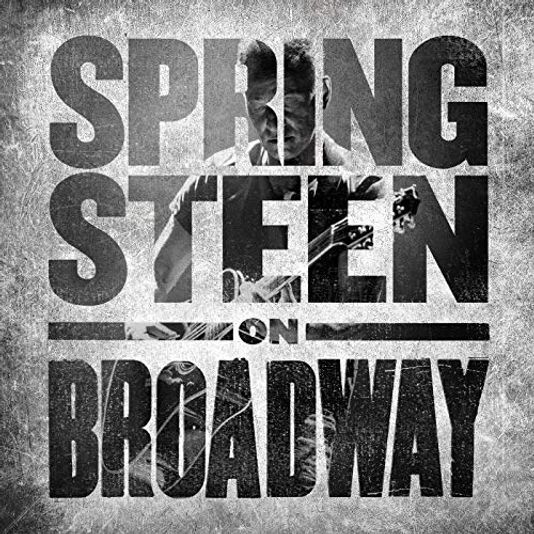
CD cover for Springsteen on Broadway, 2018.
Bruce Springsteen’s series of Broadway appearances recently concluded in December. Springsteen on Broadway ran for 236 performances at the Walter Kerr Theatre. The show was also filmed and released on Netflix in December. The film of Springsteen on Broadway was directed by Thom Zimny, who has directed numerous Springsteen documentaries, as well as the excellent documentary Elvis Presley: The Searcher. 

Springsteen on Broadway puts us up close and personal with the Boss as he regales the audiences with stories of his life and sings some of his most famous songs. It’s no surprise that there are many stories about his father, with whom Bruce had a difficult and complicated relationship. Springsteen is very aware of the ironies and contradictions of his career. He talks about being the voice of the working man, and then tells us that doing this Broadway show is the only time in his life he’s ever worked five days a week. He’s never punched a time clock or worked the night shift at the refinery, which is a testament to how effective a writer he is. Springsteen also talks about wanting to get out of his home town, finally adding the punch line: “I now live ten minutes away from my home town.” (Of course, he did get out and lived away from New Jersey for many years.) 

The show highlights Springsteen’s acute self-awareness, and how deep his emotions run. At the end of the show he describes his feelings as he drove by the house where he grew up and discovered that the huge beech tree in front of his house had been cut down. It’s beautiful how Springsteen describes his thoughts and feelings about this tree. I probably would have said something like, “I was so sad that the tree had been cut down. It meant a lot to me.” Trust me; Bruce was much more eloquent than I would be. Springsteen is such a poet, and it’s so clear throughout the show how much he loves words, as he uses the cadence of a preacher to arouse our emotions. He has the soul of a poet, but also the instincts of a showman. There are very few performers in the history of rock and roll who have been able to merge the two as successfully as he has. He’s very masculine, and at the same time, amazingly sensitive. 

Bruce is joined by his wife Patti Scialfa for two songs, “Tougher than the Rest” and the lovely “Brilliant Disguise,” both from his 1987 album Tunnel of Love. Other than that, it’s just Springsteen and a guitar, or a piano, singing his songs and telling his stories. It’s an intensely emotional experience, and it’s pretty amazing that Springsteen could perform this show night after night for so long.

Thursday, November 15, 2012

Concert Review: Bruce Springsteen and the E Street Band at the Xcel Center


The view from our seats of Bruce and the E Street Band, 11/12/12. (Photo by Mark Taylor.)

On Monday night I saw Bruce Springsteen and the E Street Band live for the first time at the Xcel Center. I had read about Bruce’s legendary three-hour concerts, but it was an amazing experience to actually be in the audience. Needless to say, it was a terrific show. Bruce packs so much emotion and intensity into each song. I don’t know how he does it. My wife said to me during the show, “I feel guilty sitting down during this concert because he’s working so hard. I feel like if he’s not sitting down I shouldn’t be sitting down either.” Springsteen has such a deep connection to his fans, and he seems so genuine in his interactions with them. He’s like the opposite of Bob Dylan, who hardly ever acknowledges the crowd in any way. 

Springsteen seemed to be in a great mood right away, as he did a lap through the crowd during the opening song, “I’m a Rocker.” He came about 10 or 20 feet away from where we were sitting. It was pretty cool to see him that up close. Bruce went back to the stage and sang “Hungry Heart,” and during the song he ran out into the audience again and crowd-surfed back to the stage. I was a little worried for Bruce, as it took the crowd a really long time to get him to the stage! But he made it back in one piece. He certainly could have waited longer into the show before he went down into the audience, but I think by doing it right away he raised the excitement level in the audience. Springsteen played some deep album cuts at the beginning of the concert, like “Night,” from “Born to Run.” He also sang a lot of songs from his most recent album, “Wrecking Ball.” One of the emotional high points of the night was Bruce’s speech during “My City of Ruins.” Bruce’s vocals on “My City of Ruins” were really moving, he reminded me of Sam Cooke. In Bruce’s speech he talked about ghosts and people who were no longer with us, which of course made everyone think of the late Clarence Clemons, Springsteen’s legendary saxophone player, who passed away in 2011. It also paid tribute to the late Danny Federici, the E Street Band’s longtime organ player. Springsteen’s current tour is the first E Street Band tour since Clemons died, and his nephew Jake Clemons played the saxophone solos in concert, and he did a terrific job. Jake sent shivers down my spine with his playing of the solo on “Jungleland.” 

“Pay Me My Money Down,” from “The Seeger Sessions,” was a highlight of the evening, featuring an enthusiastic performance from the entire band, and extended solos from the horn section. There were a lot of other great moments, like Bruce taking a bite of a candy bar offered to him by a young fan during “Waitin’ on a Sunny Day,” and, during the same song, Bruce picking a little girl out of the audience to sing the chorus with him. It was great to hear signature songs like “Badlands,” “Born to Run,” and “Dancin’ in the Dark,” which had the entire audience on their feet singing along with the Boss. “Tenth Avenue Freeze-Out” featured a moving video tribute to Clemons after Springsteen sang the lyric, “Well, the change was made uptown and the Big Man joined the band.” After “Tenth Avenue Freeze-Out” and “American Land,” it was finally time to go home, after three hours with the Boss.

Springsteen played a lot of lead guitar during the concert, and I was impressed with how good a guitar player he is. The rest of the E Street Band are all pretty darn amazing as well. Many times during the concert I thought to myself, “This is what rock and roll is all about, a performer giving it his all and communicating directly with his audience.” As long as there are performers like Bruce Springsteen, live music will continue to flourish and thrive. Of course, it helps that Springsteen is one of the greatest songwriters ever, as one of the greatest live performers. 

Set list:
1. I'm A Rocker
2. Hungry Heart
3. No Surrender
4. Night
5. Loose Ends
6. Something In The Night
7. Stolen Car
8. We Take Care Of Our Own
9. Wrecking Ball
10. Death To My Hometown
11. My City Of Ruins
12. The E Street Shuffle
13. Pay Me My Money Down
14. Devils & Dust
15. Youngstown
16. Murder Incorporated
17. She's The One
18. Shackled And Drawn
19. Waitin' On A Sunny Day
20. The Rising
21. Badlands
22. Land Of Hope And Dreams
Encore:
23. Jungleland
24. Born To Run
25. Dancin' in the Dark
26. Tenth Avenue Freeze-out
27. American Land

Sunday, January 24, 2010

The Best Music I Heard in 2009


Like my similar post from last year, this list is not just the best albums released in 2009, but the best music I discovered/rediscovered during 2009, regardless of when it originally came out. And I'll pick one great song from each CD.
First up, albums that were released in 2009:
Robyn Hitchcock, "Goodnight Oslo"
A simply brilliant album from one of my favorite songwriters. I've listened to this CD a lot this year, and it holds up very well through repeated listens. One of my music highlights of 2009 was seeing Robyn in concert and meeting him after the show. Check out "Intricate Thing."
Chris Isaak, "Mr. Lucky"
Great comeback album proving that Isaak still has his great songwriting talent and his gorgeous, haunting voice. This is his first album of all-new material since 2002, it's nice to have him back. Listen to "Mr. Lonely Man."
Nick Lowe, "Quiet, Please: The New Best of Nick Lowe"
Okay, so this is a compilation, but it's the only release we got from Nick this year, and it's wonderful to hear all his great songs spread out over two discs. It makes you realize how many truly great songs he's written. Give "Without Love" and "Soulful Wind" a spin. (I had to pick two songs!)
Elvis Costello, "Secret, Profane & Sugarcane"
The ever-prolific Elvis dropped another album this year, and it's a winner. I need to listen to this CD some more. Check out the funny "Sulphur to Sugarcane."
The Beatles re-issues
I just got these for Christmas. (Thanks Mom!) So I haven't fully explored them, but the sound is amazing! Give "Back in the USSR" another listen. And the promo film clips make me want to see a DVD of all of them! (And can we see all 3 "Hello, Goodbye" clips, please?)
Okay, that takes care of CD's that came out in 2009, so let's move back into the past.
The Fireman (Paul McCartney), "Electric Arguments"
Amazing. Macca continues his 21st century winning streak with this more experimental album. Paul's not trying to please anyone here, it really sounds like he's making music for the sheer pleasure of it. Groove to "Highway."
Bruce Springsteen, "The Essential Bruce Springsteen"
I bought Bruce's single-disc "Greatest Hits" in the summer of 2008, but it wasn't until his Super Bowl performance in 2009 and my subsequent purchase of the double-disc "Essential" that I really became a fan. Bruce picked up social protest music where Dylan left it. And he writes better melodies than Dylan. Give "Badlands" and "Brilliant Disguise" a listen.
Leo Kottke, "Instrumentals: The Best of the Capitol Years"
Kottke's guitar playing isn't easy to categorize. Is it folk, country, Americana, jazz, or some hybrid mixture of all of the above? Kottke is a long-time Minnesota resident, so I've known of him for a long time, but it was just this fall when I started to seriously listen to his music. There's no one quite like him on guitar. Check out "Lost John," and prepare to be amazed.
The Beach Boys, "Sounds of Summer: The Very Best of the Beach Boys"
I've loved the Beach Boys since I was about 8 years old. I think it had something to do with the fact that they had so many songs about cars, which were one of my primary obsessions as a youngster. I had numerous tapes of their music, and this CD has all the songs that I loved as a kid. Listening to it all over again it reminds me why I loved this music, it's just so much fun to hear! The beautiful harmonies, the sheer joy that drives most of their songs, the great arrangements, it's really stood the test of time. It's too bad that Brian Wilson kind of lost it after "Pet Sounds" and the group really didn't evolve much after 1966. But from 1962-66, they were working at a very high level. Listen to "California Girls" and "Good Vibrations," and tell me that you don't forget all of your problems for three minutes.
John Coltrane, "The Classic Quartet: Complete Impulse Studio Recordings"
I listened to absolutely every note of this mammoth 8-CD set this fall, and it made me rediscover Coltrane's great group. The lineup was Coltrane on tenor and soprano saxophones, McCoy Tyner on piano, Jimmy Garrison on bass, and Elvin Jones on drums. This set collects all of their performances from 1962-65. The first two discs start innocently enough, with Coltrane covering well-worn standards from the 1930's and 40's, played in a relatively straightforward style. The reason Coltrane did this was because many critics at the time were labeling his playing "anti-jazz." So he wanted to show them that he could produce music that was not as "out there" as some of his more recent recordings on the Atlantic label had been. Things change pretty quickly, though, as on Disc 3 we get all of "A Love Supreme," perhaps Coltrane's most eloquent musical statement. In the later discs, song structures start disappearing, and it sounds more like the musicians just jamming. Coltrane's playing was constantly evolving, and one can only speculate where he music would have gone had he lived past 1967 and the young age of 40. The music on this set captures him at the peak of his powers. Listen to the whole album of "A Love Supreme," and if that's too much, go with the haunting song "Alabama," Coltrane's tribute to the civil rights movement.

Wednesday, February 18, 2009

Bruce Springsteen, "Hungry Heart"


In honor of the holiday recently past, (Valentine's Day, not Presidents' Day) I thought I should write about a song about love that's been stuck in my head for the last few days. It's Bruce Springsteen's song "Hungry Heart," which was his first Top Ten single, from his 1980 double-album "The River."


It's easy to hear why this was Bruce's first big hit single, it has a very catchy tune, and much fewer words than his early songs! It also has a very simple, hooky chorus. The song starts with a brief drum fill from Max Weinberg, then moves straight into the main melody, played by the piano. Clarence Clemons's saxophone honks away, and the song has a 50's-60's feel to it. Bruce shouts "Yeah!" and then starts singing. But the relentlessly upbeat music is fitted to uneasy lyrics, "Got a wife and kids in Baltimore, jack/I went out for a ride and I never went back." Okay, so in the first two lines of the song we've established that the narrator has a wife and kids, and one day he simply up and leaves them. What reason does the narrator give for his actions? "Like a river that don't know where it's flowin'/ I took a wrong turn and I just kept goin'." Well, that's a suitable justification, right? No, not really. Notice how Bruce works in the image of a river, which is also the central image in the song "The River." By comparing his actions to those of a river, the narrator is essentially saying that he has no control over his actions, that nature is shaping his actions, the same way that nature shapes the river. Which brings up an interesting question, are people meant to be faithful and monogamous? I won't go into all that here, but suffice it to say, there are all kinds of answers to this question.


But that question leads us nicely into the chorus, "Everybody's got a hungry heart/everybody's got a hungry heart/lay down your money and you play your part/everybody's got a hungry heart." The narrator is saying, obviously, that everyone has a "hungry heart," meaning that everyone needs affection and attention, no matter where it comes from. And that everyone is hungry, or greedy, for love and affection. Everybody always wants more than what they currently have. It doesn't matter that the narrator is married and has children, he is still susceptible to the charms of the opposite sex. He still wants something more. I'm not entirely sure what the "lay down your money and you play your part" line means, it could be a reference to prostitution, or it could simply be referring to the different gender roles we play, that men usually pay for things.


The first verse also references Springsteen's recurring motif of travel, of escape, of getting away from things, usually by car. Like Rabbit Angstrom in John Updike's novel "Rabbit, Run," Bruce's narrator simply kept driving away from his wife and kids. He is, like Rabbit, running away from responsibility. In the second verse, we discover what he finds once he stops running. "I met her in a Kingstown bar/We fell in love I knew it had to end." Okay, so he meets a woman in a bar, but what does he know "had to end"? His marriage, or this illicit relationship? I'm going with the marriage, based on the next two lines. "We took what we had and we ripped it apart/Now here I am down in Kingstown again." So the narrator and his mistress ripped apart their current relationships to be together. (Is she married too?) And now the narrator is back in Kingstown again, to see his mistress. Because, well, both the narrator and his mistress have hungry hearts.


At the very end of the second chorus, Bruce lifts his voice up on the last syllables of "hungry" and the song changes key upwards. Danny Federici gets a tasty little organ solo that leads us into the final verse. "Everybody needs a place to rest/Everybody wants to have a home." Which is true, but the narrator had a home and a place to rest, and he threw it all away. This sounds like more self-justification to me. "Don't make no difference what nobody says/Ain't nobody like to be alone." Okay, so once we get past the numerous grammatical errors in these two lines, the narrator seems to be justifying his actions by saying that people naturally seek companionship. But again, the narrator had companionship in his marriage, and left it. Perhaps the narrator would say that even though he was married, he was still really alone, because it was an unfulfilling relationship. The song then closes with another repetition of the chorus, and Bruce gets in some scatting on the fade out.


"Hungry Heart" is a great example of Springsteen matching an upbeat, catchy melody to lyrics that present something more than just a poppy, upbeat message of "Everything's okay." (Think of "Born in the USA.") "Hungry Heart" asks some tough questions about love and relationships: when are we happy, when are we satisfied, and what happens when we should be satisfied, by society's standards of relationships, but really aren't satisfied. What happens when someone tries to break out of those relationships? What's the emotional fall out from the decision to "just keep goin'"? Do we always want what we can't have? Does everyone really have a "Hungry Heart" that is always searching for something "better," something new and fresh, no matter what the cost is to others? That's kind of a depressing way to look at relationships. But these questions are all worth pondering.

Tuesday, February 17, 2009

CD's I Bought This Weekend

Well, the Electric Fetus, the best record store in the Twin Cities, had their annual Valentine's Day sale last weekend. I picked up a few things, so I thought I might as well make the list a blog post. I got almost everything used, so I saved quite a bit of money.

Bruce Springsteen, "Greetings From Asbury Park, NJ" Since I have the original vinyl, but lack a record player, I thought I should get the CD and actually listen to this music. I just finished listening to "The Essential Bruce Springsteen" and I'm more impressed with the Boss than I was at first. I'm also just impressed by the physical energy he brings to performing. His Super Bowl halftime show was amazing!

Elvis Costello, "Brutal Youth" I found the Rhino 2-disc re-issue used for $8.99, so I bought it. I really like "All This Useless Beauty," from around the same time period, so I figured I'd give this one a shot. It also came highly recommended from EC expert Holly, so that nudged me towards the purchase.

Billy Joel, "Storm Front" Okay, so Billy Joel isn't very "hip." But, I've been listening to "The Essential Billy Joel," and I've forgotten how much I like his songs. He's really a great pop songwriter. And my Dad had "Storm Front" on cassette, so I have fond memories of listening to it in the car. And I'm an American history nerd, so 8-year-old me loved "We Didn't Start the Fire." And it was only $2.99.

James Taylor, "Gorilla" Okay, so James Taylor isn't very "hip" either. But he's a damn fine singer/songwriter. He's one of those artists where every album is pretty similar to every other album, but they're all pretty good. I love the song "Mexico," from this album, so I'm interested to hear the rest of the album.

James Taylor, "October Road," Yes, another JT CD. This one is really good, and even though it came out in 2002, it's his most recent album of new songs he's written. The first time I got interested in James Taylor was around 2002 when he was profiled on "60 Minutes." I knew nothing about his background, so I was surprised to learn he had battled depression and drug abuse. It gave me a lot more respect for him. I was like, "Oh, you suffered for your art."

James Taylor, "New Moon Shine," And one more from Sweet Baby James. It was only $3.99, and this CD is out of print, so I snatched it up.

Robyn Hitchcock, "Queen Elvis" This was the highlight of my shopping trip! One of the only Robyn CD's I don't have, because it's out of print! I was very excited to find this used for $6.99. It even has a promotional sticker on it, bewilderingly calling Robyn, "#1 Post-Modern artist." What exactly does that mean? Whatever it means, I'm sure that Robyn lives up to it.

Sunday, February 8, 2009

Bruce's Covers


The AV Club website had a funny and interesting article last week, "The Problematic Cover Art of Bruce Frederick Joseph Springsteen." In the article, the Boss gets taken to task, and rightly so, for issuing one of the ugliest album covers in recent memory on his latest album, "Working on a Dream." It's just hideous. The first time I saw the cover I was like, "Is that a fan's rendition of what they think the cover should look like? Oh, no, it's the actual cover? Oh dear God!" It's just so cheap and amateurish-looking. At the most, someone must have spent a good 15 minutes on it.


So the AV Club, or more specifically, Noel Murray, dissects Springsteen's many different album covers, good and bad. Murray doesn't really like "Greetings From Asbury Park, N.J." But I beg to differ, in part because I have the original vinyl. For being a debut album by an unknown artist, it's odd that the cover isn't simply a huge close-up of Bruce. (Columbia saved that for his second album, "The Wild, The Innocent, and the E Street Shuffle.") In fact, there's nary a picture of Bruce on the front cover, just his name and a 1950's-looking postcard. (Is it a real postcard, or a fake one designed especially for the album?) But here's where it gets cool. The postcard section actually folds out, to reveal lyrics underneath, and credits on the backside of the postcard, along with a picture of Bruce that looks like a stamp. The credits are hand-written, in the same style as Bruce's name on the front, making it look like a real postcard. I think it's a very clever design, it's certainly very different and eye-catching.


Murray also has a problem with the fact that Bruce uses pictures of himself on his album covers a lot. I don't think that's such a big deal, the photos are generally different enough that they don't smack of useless repetition to me. Although, "The Essential Bruce Springsteen 3.0," which I just got last week, on sale at Best Buy, features no less than 3 pictures of Bruce looking down at the ground. Which is kind of odd. But Bruce is a good-looking guy, so why shouldn't he put himself on his album covers? I think the cover of Bruce's "Greatest Hits" is awesome, just a picture of the Boss from the back, Fender Telecaster draped over his shoulder, ready to rock. It's simple and iconic. But Bruce does have some bad album covers, like "Human Touch" and "Lucky Town." (Although, to be fair, it was 1992.)