Showing posts with label modernist novels. Show all posts

Sunday, May 24, 2020

Book Review: Good Morning, Midnight by Jean Rhys (1939)


Penguin paperback cover of Good Morning, Midnight, by Jean Rhys, first published in 1939.

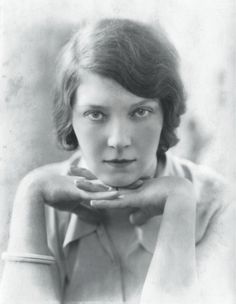
Ella Williams, who wrote under the pen name of Jean Rhys.
Jean Rhys’ 1939 novel Good Morning, Midnight, was my introduction to her as a writer. I read Good Morning, Midnight for a class I took in college about British Literature of the 20th century, back in 2002. I had heard of Rhys before, because her novel Wide Sargasso Sea made Modern Library’s list of top 100 novels in 1998. I remember when I worked at Barnes and Noble back in 1999 and 2000 a customer recommended Wide Sargasso Sea to me. 

I was bowled over by Good Morning, Midnight when I read it in college, as I found it a fascinating portrait of a woman struggling with her demons. Re-reading it in 2020, I’m still struck by Rhys’ artistry and her deep insights into the human condition. Good Morning, Midnight, is the last of Rhys’ four starkly modernist novels that were published between 1928 and 1939: Quartet, first published as Postures, After Leaving Mr. Mackenzie, Voyage in the Dark, and Good Morning, Midnight. The four novels aren’t really meant to be a quartet, but they fit together very nicely in their themes and in the mood that Rhys’ writing creates. The novels all deal with female protagonists who endure difficult relationships with men, and they have few resources for dealing with modern life. These women are always on the edge of poverty, and they lack the education and drive to do much with themselves. (They’re probably all also suffering from clinical depression.) 

There’s no real plot to speak of Good Morning, Midnight, as it’s just the narrator, who may or may not be named Sasha, hangs out in Paris, and tell us a little bit about her past. But you don’t read a Jean Rhys novel for the page-turning plots—you read them for the beautiful writing. 

One of the men the narrator meets is a melancholy Russian who has some great quotes: “When I make an appointment I always keep it, even though I think the other person won’t be there.” (p.63) “If someone had come to me and asked me if I wished to be born I think I should have answered No. I’m sure I should have answered No. But no one asked me. I am here not through my will.” (p.64) Jean Rhys’ heroines might well say the same thing.

The narrator also recounts a time when she was at her lowest ebb: “I got so that I could sleep fifteen hours out of the twenty-four.” (p.86) Yikes, that’s not so good.

In fitting with the title of the novel, time does strange things in Good Morning, Midnight. The narration constantly shifts between the present and the past. And nothing much happens in either, so it’s hard to keep them straight. That isn’t meant to be criticism of Rhys’ writing: different novels offer different pleasures. Jean Rhys was a master at mood, and throughout her four modernist novels she conjures up bleak cityscapes that offer no respite from the desperate issues that her characters face. Paris is the city of light, but it sure doesn’t feel like it in Good Morning, Midnight. 

The ending of Good Morning, Midnight is remarkably similar to the ending of Tennessee Williams’ novel The Roman Spring of Mrs. Stone. Williams’ novel was published in 1950, 11 years after Good Morning, Midnight. Did Williams read Good Morning, Midnight? There’s probably no way to know for sure. The book certainly wasn’t a best-seller, but Williams had been writing short stories and plays for decades by 1950, so he could have been aware of Rhys’ work. Update: No, it’s very unlikely Williams read Good Morning, Midnight, since I learned from Carole Angier’s biography of Jean Rhys that Good Morning, Midnight wasn’t published in the United States until 1970. (Jean Rhys: Life and Work, by Carole Angier, p.596) 

Good Morning, Midnight was not a sales success when it was released in 1939, and after its release Rhys slid into obscurity, not publishing another novel until Wide Sargasso Sea in 1966. As more time passed with no new works forthcoming, people assumed Rhys had died, not a totally unrealistic assumption, especially given the bleak ending of Good Morning, Midnight. When the actress Selma Vas Dias wanted to get in touch with Rhys about adapting Good Morning, Midnight as a play, she put an ad in the newspaper to track the author down. It worked, and Dias helped inspire Rhys to begin writing again. 

Good Morning, Midnight is an excellent, if often overlooked, modernist masterpiece.

Saturday, August 4, 2018

Book Review: After Leaving Mr. Mackenzie, by Jean Rhys (1931)

A very sexy cover of After Leaving Mr. Mackenzie, with a painting by Amedeo Modigliani.


Ella Williams, who wrote under the pen name of Jean Rhys.
Jean Rhys was the pen name of Ella Williams. Born in the Caribbean island of Dominica, Rhys lived most of her adult life in England. Rhys published several books, beginning with The Left Bank, a collection of short stories, in 1927. That was followed by a series of short novels over the next dozen years. Postures, later republished as Quartet, was published in 1928. (I reviewed Quartet here.) After Leaving Mr. Mackenzie, Rhys’ second novel, came out in 1931, and was followed by Voyage in the Dark in 1934, and Good Morning, Midnight in 1939. Although these books are now regarded as classics of modernism, at the time they didn’t exactly set the world on fire. After Good Morning, Midnight, Rhys disappeared from sight, enough so that a BBC producer who was producing a radio version of Good Morning, Midnight in the mid-1950’s actually took out ads in newspapers, asking about Rhys’ whereabouts. It turned out that Rhys was still alive. She published just two more books during her lifetime, the critically acclaimed Wide Sargasso Sea in 1966, which finally brought her out of obscurity, and Sleep it Off Lady, a collection of short stories which appeared in 1976. Rhys died in 1979 at the age of either 88 or 84. (The Penguin edition of After Leaving Mr. Mackenzie gives her birth year as 1894, Wikipedia says 1890.) 

Rhys’ novels from the 1920’s and 1930’s generally deal with the lives of women who are dependent on men for their financial security. I’ve read Quartet, After Leaving Mr. Mackenzie, and Good Morning, Midnight, and they all fit together very well. Rhys’ lead female characters don’t have enough education to find a profession, so they end up drifting from man to man, eking out an existence thanks to the generosity of their male companions. Rhys had a very interesting comment in her interview with The Paris Review in 1979, the year she died:

“When I was excited about life, I didn’t want to write at all. I’ve never written when I was happy. I didn’t want to. But I’ve never had a long period of being happy. Do you think anyone has? I think you can be peaceful for a long time. When I think about it, if I had to choose, I’d rather be happy than write. You see, there’s very little invention in my books. What came first with most of them was the wish to get rid of this awful sadness that weighed me down.” Jean Rhys, The Paris Review interview, 1979.

After Leaving Mr. Mackenzie tells the story of Julia Martin, who has, well, left Mr. Mackenzie as the novel opens. We follow Julia as the checks from Mr. Mackenzie suddenly stop arriving, and she returns to London after ten years in Paris. In London, Julia reckons with her sister Norah, who has been caring for their invalid mother, now at death’s door. 

I don’t want to give too much away by adding more plot summary, and anyway, After Leaving Mr. Mackenzie is not a novel that depends much on its plot. Of note to literary fans: in the novel there is a quote from Almayer’s Folly, Joseph Conrad’s first novel, published in 1895, which indicates that Conrad’s work must have been an influence on Rhys. Like Conrad, who was Polish by birth, Rhys no doubt felt herself an outsider to British culture.

There are many excellent quotes in After Leaving Mr. Mackenzie that demonstrate Jean Rhys’ keen observance of human nature. Some of my favorites are:

 “Her mind was a confusion of memory and imagination.” (p.9) 

“Once you started letting the instinct of pity degenerate from the general to the particular, life became completely impossible.” (p.34) 

“It was as if I were before a judge, and I were explaining that everything I had done had always been the only possible thing to do. And of course I forgot that it’s always so with everybody, isn’t it?” (p.40) 

“Perhaps the last ten years had been a dream; perhaps life, moving on for the rest of the world, had miraculously stood still for her.” (p.48) 

If you’re interested in modernism, or in great writing, you need to read Jean Rhys.

Note: Although my Penguin paperback of After Leaving Mr. Mackenzie gives the publishing date as 1930, other sources say 1931, including Carole Angier's biography Jean Rhys: Life and Work, so I've changed the date to 1931.