Showing posts with label 2014 books. Show all posts

Wednesday, January 28, 2015

Book Review: Napoleon: A Life, by Andrew Roberts (2014)


Cover of Napoleon: A Life, by Andrew Roberts, 2014.


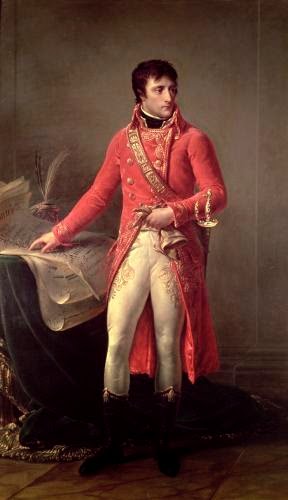
First Consul Bonaparte, painting by Antoine-Jean Gros, 1802.

Historian and author Andrew Roberts.
Napoleon Bonaparte died on May 5, 1821. More than 70,500 days have passed since his death, and yet more than 70,500 books have been published with Napoleon’s name in the title. What is it about Napoleon that future generations have continued to find so fascinating? In his 2014 book Napoleon: A Life, Andrew Roberts chronicles Napoleon’s life from cradle to grave and gives us lots of insight as to what made Napoleon such an interesting figure. Roberts’ epic biography is an amazing piece of work. By the end of the book you come to feel as though you know Napoleon. Roberts is the first biographer of Napoleon’s to use his 33,000 surviving letters, which have been published over the last few years for the first time. Roberts does an excellent job of showing how compartmentalized Napoleon’s mind was, and how he was able to focus on so many different things. The term “micromanager” might well have been coined to describe Napoleon, as he penned letters on topics ranging from military strategy to settling disputes between stage-hands of the Paris Opera. 

Roberts peels away the layers of myth attached to Napoleon’s life, so he becomes more than just the stiff figure from historical paintings, he actually feels like a real person. Napoleon must have had an extraordinary charisma in person, as it seems as though everyone who met him was greatly charmed by him. Even Frederick Maitland, the British captain who accepted Napoleon’s surrender and who ferried him to exile on St. Helena, had kind words to say about him, writing of him: “…to such an extent did he possess the power of pleasing that there are few people who could have sat at the same table as him for nearly a month, as I did, without feeling a sensation of pity, allied perhaps to regret, that a man possessed of so many fascinating qualities, and who had held so high a station in life, should be reduced to the situation in which I saw him.” (Roberts, p.777) 

In Napoleon: A Life, we get to see all the different sides of Napoleon. We see the egotistical conqueror, but we also glimpse Napoleon’s sarcastic sense of humor and his indefatigable work ethic. Roberts has crafted a book that is a pleasure to read, and all 810 pages are gripping. Every military campaign that Napoleon embarked upon could easily fill an entire book by itself, but Roberts does an excellent job of bringing us the essentials. Roberts has visited nearly every battlefield that Napoleon fought on, and this depth of research makes the book rich and vibrant. 

If you want to read a biography about a truly fascinating man, pick up Napoleon: A Life.

Friday, December 19, 2014

Book Review: Pete Rose: An American Dilemma, by Kostya Kennedy (2014)


Cover of Pete Rose: An American Dilemma, by Kostya Kennedy, 2014.


Pete Rose collecting hit number 4,192, breaking Ty Cobb's all-time record, September 11, 1985.

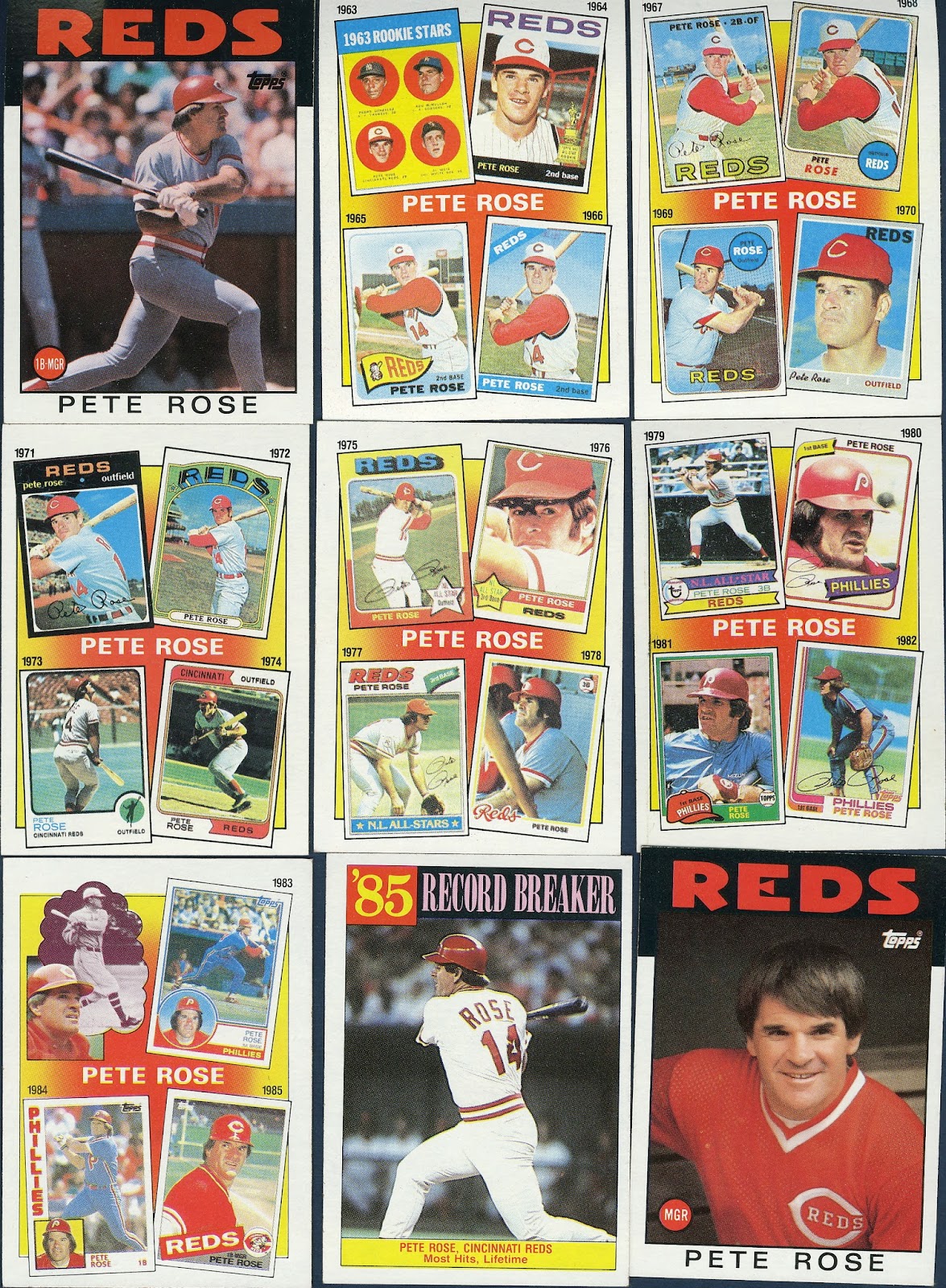
Special Topps cards from 1986 commemorating Rose passing Ty Cobb.

Pete Rose playing for the Phillies, illustrating why he was nicknamed "Charlie Hustle."

Rose during his brief stint with the Montreal Expos in 1984. He collected his 4,000th hit with the Expos.
Pete Rose is baseball’s all-time leader in hits, games, at-bats, and plate appearances. He’s 6th all-time in runs scored, 2nd in doubles, and 7th in total bases. Rose led the league in hits 7 times, doubles 5 times, runs scored 4 times, won 3 batting titles, was the 1963 NL Rookie of the Year, and the 1973 NL MVP. He was a 17-time All-Star, and made the All-Star team at 5 different positions, a record that will most likely never be broken.

Pete Rose played in his last major league game in 1986 and has been banned from major league baseball since 1989, yet he might still be baseball’s most divisive figure. Lots of ink has been spilled over Rose in the past 25 years, and Kostya Kennedy’s 2014 book Pete Rose: An American Dilemma, is the latest attempt to dissect the life and career of baseball’s all-time hit leader.  

Kennedy does a good job of analyzing the different parts of Rose’s life, with detours into the history of Cincinnati, and Pete’s relationship with his brother Dave. A highlight of the book was the section on the baseball career of Rose’s son Pete Rose Jr., who played professional baseball from 1989 until 2009, accumulating just 16 plate appearances and 2 hits in the major leagues in 1997. Like his father, Rose Jr. is a player with a tremendous work ethic. Pete Rose Jr. is now a manager in independent baseball, continuing his love affair with the game.
 
Pete Rose: An American Dilemma assumes a great deal of familiarity with Rose’s playing career, as it jumps around in chronology and doesn’t cover every year of Rose’s 24-year playing career. I was already quite familiar with Rose’s career, but I wish the book had provided more context for Rose’s remarkable accomplishments. 

Throughout the book, Kennedy never really comes down on one side or the other, for or against Rose. Does he think Pete Rose should be in the Hall of Fame? Does he think that Pete Rose should be reinstated? Kennedy never really says. Kennedy is harsh on Rose throughout the book, yet he clearly feels that the Hall of Fame’s treatment of Rose was unfair when it singled him out and changed the rules in 1991 so he wouldn’t appear on the ballot. The new rule stated that anyone on baseball’s ineligible list could not appear on the ballot for the Hall of Fame. Since Rose was the only player on the ineligible list, the rule change was obviously targeted at him. The Hall of Fame clearly didn’t want to deal with the possibility of Rose being voted into the Hall of Fame while at the same time being banned from baseball, which seems like the biggest oxymoron imaginable. 

Pete Rose’s behavior since 1989 is oftentimes incomprehensible to rational people. When it became clear during Major League Baseball’s investigation of his gambling habits that Rose would be banned, Rose and his lawyers fought for a paragraph in the document banning Rose that said he neither admitted nor denied having bet on baseball. This was a ridiculous assertion to make, and I don’t understand why then-Commissioner Bart Giamatti allowed such unclear language into the final document. If Rose wasn’t admitting that he bet on baseball, why was he being banned? If Rose hadn’t bet on baseball, why did he accept the ban? Major League Baseball should have forced Rose to admit in 1989 that he did bet on baseball. Instead, Rose lied for 15 years, not telling the truth and admitting that he bet on baseball until the release of his 2004 autobiography, My Prison Without Bars.
 
If Pete Rose were a smarter guy he might have been reinstated and be back in baseball by now. But I think he’s a dumb guy who really doesn’t understand what he did wrong. He knows that he broke the rules, but he’s never seemed ashamed that he broke the rules. As Kennedy says, Rose isn’t sorry for what he did, he’s only sorry that he got caught. Rose’s half-hearted apologies have never seemed sincere. 

In my opinion, in order to have any chance of getting back into baseball, Rose needed to do three things:

1. Come clean and tell the whole truth about betting on baseball
      2. Apologize for betting on baseball
      3. Stay as far away from gambling as possible

Rose has failed miserably at those three tasks, as he didn’t tell the truth or apologize until 2004, and he spends most of his time in Las Vegas, signing autographs at memorabilia shops. But signing his name for money has proven to be most lucrative for Rose, as according to Kennedy, Rose pulls down a guaranteed income of $70,000 a month in Las Vegas. Rose also might not have told the whole truth in 2004, when he said he bet on baseball “four or five times a week.” He amended that to saying in 2007 that he bet on baseball “every night.” Is there anything else Rose is saving for his next book?

Pete Rose is a contradiction. On one hand, he seems guileless, unflinchingly honest, and yet he lied about betting on baseball for 15 years. During his playing career, Rose was extremely savvy about cultivating his image as “Charlie Hustle,” by always running to first base on a walk, and always sliding into bases headfirst, whether it was necessary or not. But since he was banned from baseball, Rose seems tone-deaf to how he comes off to the public. 

Part of me likes Pete Rose. He was a great baseball player, someone who gave it his all out there on the field every single day he played. I met Pete Rose at a baseball card show to get his autograph, and he seemed like a nice guy in the thirty seconds I talked to him. I even watched his terrible reality show on TLC, “Hits and Mrs.” But he’s also a jerk who bet on baseball and doesn’t really seem to get why that’s such a big deal. And that’s the contradiction of Pete Rose. I think that Rose deserves to be in the Hall of Fame as a player, but I don’t think Rose should be in the Hall of Fame as long as he’s banned from baseball. I know that the Hall of Fame and Major League Baseball are different organizations, but for me, personally, if you’re banned from one, why should you be in the other?

If you’re interested in Pete Rose’s baseball career, and his post-baseball life, you should read Pete Rose: An American Dilemma. It’s a great introduction to one of baseball’s most controversial figures.

Tuesday, September 2, 2014

Book Review: But Enough About You, by Christopher Buckley (2014)


Cover of But Enough About You, by Christopher Buckley, 2014.


Christopher Buckley
Christopher Buckley’s most recent book is But Enough About You, a collection of essays he has written for various publications over the last 15 years. Buckley is one of my favorite writers, and I devoured But Enough About You with delight. The pieces collected in But Enough About You are a true grab-bag, running the gamut from humorous to serious. However, the essays collected here work well together, even though they span a decade and a half. As a writer, Buckley is consistently funny, witty, and smart. His prose entertains and informs, as he sprinkles witty bon mots throughout. 

But Enough About You also includes more serious pieces, and for me these were some of the highlights of the book. Buckley’s essay about visiting Auschwitz with his father was quite moving, as was his tribute to his late friend Christopher Hitchens. There is an excellent essay on Buckley’s relationship with President George H.W. Bush. Buckley was a speechwriter for then-Vice President Bush from 1981 until 1983, and his admiration for Bush is clear. Another fascinating personal essay was “Dear Joe,” about Buckley’s correspondence and friendship with Joseph Heller, the author of Catch-22. My only criticism of “Dear Joe” is that while Heller’s letters to Buckley are quoted, Buckley’s letters to Heller are not. Buckley may have thought that his letters would not be of interest, but he sells himself short, as his authorial gifts are many. 

I was particularly fascinated by Buckley’s 2012 essay on the death of Gore Vidal. Here a little historical backstory is required. Back in 1968, Vidal and William F. Buckley, leading light of the conservative movement and Christopher’s father, squared off in a series of televised debates during the Democratic National Convention in Chicago. During one debate, Buckley and Vidal got into a rather heated exchange, with Vidal calling Buckley a “crypto-Nazi,” and Buckley responding in kind by calling Vidal a “queer.” The following year, both men wrote articles for Esquire magazine about the event. Vidal’s article had some rather nasty things to say about Buckley, who ended up suing Vidal and Esquire for libel. Buckley won the case, and with it the eternal enmity of Gore Vidal. While Buckley refrained from criticizing Vidal in print, Vidal never missed a chance to lay into Buckley.  In keeping with his cranky nature, Vidal had only nasty things to say upon Buckley’s death in 2008. Adding insult to injury, as was his wont, Vidal also insulted Christopher Buckley, calling him “creepy” and “brain dead.” Christopher Buckley has every right to hate Gore Vidal and say nasty things about him when he died in 2012. But Buckley doesn’t, and instead crafted an intelligent essay that acknowledged both Vidal’s strengths as a writer and his faults as a human being. As a fan of both William F. Buckley and Gore Vidal, I can safely say that while politically I agree much more with Vidal, William F. Buckley was twice the man Gore Vidal was. 

Ironically, But Enough About You doesn’t include what might be Christopher Buckley’s most famous, or notorious, short essay, “Sorry Dad, I’m Voting for Obama,” which was published on The Daily Beast website in October, 2008. Buckley hated the title of the piece, and he demanded that the editors change it. (They didn’t.) In the essay, Buckley explained the reasons why he was voting for Barack Obama rather than John McCain in the 2008 election. Buckley’s reasons were quite rational, as he wrote, “Obama has in him…the potential to be a good, perhaps even great leader. He is, it seems clear enough, what the historical moment seems to be calling for.” So as to not unduly antagonize the right wing, Buckley purposely did not publish the piece in the pages of National Review, the magazine his father started, and for whom he had recently begun writing a column. Nevertheless, the piece caused the right wing to virulently turn against Buckley, and it forced him to resign from National Review. The kerfuffle over Buckley’s piece is a good example of how the Republican party has purged itself of any dissenting voices. In the essay Buckley quotes his father as saying, “You know, I’ve spent my entire life time separating the Right from the kooks.” Well, now it’s the Tea Party and their kooks separating the Right from anyone with half a brain. 

If you’re a fan of Christopher Buckley’s satirical novels, you will surely enjoy But Enough About You, and the humor of essays like “The Origin and Development of the Lobster Bib-Volume II: Rome to the Present Era,” and “How to Write Witty E-Mail (Hint: Pretend They’re Telegrams),” a 1998 essay that was the first piece I ever read by Christopher Buckley.

Wednesday, July 2, 2014

Book Review: Stars and Strikes by Dan Epstein (2014)


Stars and Strikes, by Dan Epstein, 2014.


Mark "the Bird" Fidrych, 1976's biggest rookie sensation.

The 1976 World Champion Cincinnati Reds. How did anyone pitch to that lineup?

Steve Carlton throwing his slider for the Phillies in 1976. Carlton went 20-7 that year to lead the NL in winning percentage.

Reggie Jackson as an Oriole? Yup, only in 1976.
One of the best baseball books I’ve read recently was Big Hair and Plastic Grass, by Dan Epstein, which tells the story of baseball during the tumultuous decade of the 1970’s. I reviewed Big Hair and Plastic Grass here, and I was very pleased when I learned that Epstein was following up that book with this year’s Stars and Strikes: Baseball and America in the Bicentennial Summer of ’76. Like Big Hair and Plastic Grass, Stars and Strikes is a highly entertaining read. As the title tells us, Stars and Strikes focuses on baseball in the Bicentennial year of 1976. 

Why was 1976 such a pivotal year for baseball? Well, one reason was that in 1976 the reserve clause was finally struck down. The reserve clause had kept players tied to one team for as long as the team wanted that player. Once the reserve clause ended, players could become free agents and sell their services to the highest bidder. This led to a dramatic explosion in player salaries, which has continued unabated to this day. To give just one example of how baseball salaries changed with free agency, reliever Bill Campbell went from making $22,000 in 1976 with the Twins to making $250,000 in 1977 with the Red Sox. Unsurprisingly, baseball owners were less than thrilled by the prospect of having to shell out more money to their players, so, for the second time in five years, they locked the players out of spring training. The owners had also locked out the players in 1972, which lead to the season being slightly shortened. The owners were hoping that the players would agree to a new basic labor agreement that forfeited the right to free agency that they had just won. That didn’t happen, so the owners were forced to go along with the new rules of free agency.

The 1976 baseball season saw the emergence of several unlikely stars. Randy “The Junkman” Jones, a starting pitcher for the San Diego Padres known for his off-speed pitches, got off to an extremely good start in 1976. Jones had fashioned a 16-3 record in the first half of the season, giving him an outside chance at winning 30 games. But Jones slowed down in the second half of the season, going just 6-11. However, that still gave him a league-leading 22 wins, and the National League Cy Young Award. 

The 1976 American League counterpart to Jones was the Detroit Tigers’ Mark “the Bird” Fidrych, who became a nationwide sensation thanks to his excellent pitching and amusing antics while toeing the rubber. Fidrych was brought up from the minor leagues in late April and made his first start on May 15th, pitching a complete game and holding the Cleveland Indians to just two hits. Fidrych got a lot of press for his unorthodox behavior on the mound, as he talked to baseballs, shook his teammates’ hands when they made a good defensive play, and smoothed the mound with his hands. For the record, Fidrych always said that he was never talking to the baseball-he was talking to himself, which helped him stay focused. None of Fidrych’s behavior was an act, and he brought a genuine child-like enthusiasm to baseball. Fidrych’s engaging spirit touched a nerve in 1976 America, which quickly embraced him as a kind of folk hero. In interviews promoting the book, Dan Epstein has made the point that the media has changed so much in the nearly forty years since Fidrych became a sensation that it’s tough to imagine the same thing happening again. I definitely agree, as now we know so much about every player from the moment they play in their first game. Now, you can watch every single at-bat of Yasiel Puig or Jose Abreu. Back in 1976, unless you lived in Detroit, your only opportunity to see Fidrych was to catch him on NBC’s Game of the Week. Fidrych finished the season with a 19-9 record, and a league-leading 2.34 ERA. His 24 complete games also lead the league, and Fidrych was the runaway choice for American League Rookie of the Year. Sadly, Fidrych suffered through an array of injuries beginning in 1977, and won just 10 more games over the next four years in the big leagues. 

1976 saw the resurgence of the New York Yankees, as they finally awoke from a decade-long slumber and returned to the World Series for the first time since 1964. The Kansas City Royals ended the Oakland A’s AL West dynasty, snapping the A’s streak of AL West championships at 5 in a row. The Royals started a dynasty of their own, making 7 playoff appearances from 1976 until 1985, when they won the World Series. Unfortunately for Royals fans, the team hasn’t made it back to the playoffs since 1985. 

In the National League, the Philadelphia Phillies won 101 games to make the playoffs for the first time since 1950. The Phillies were a well-rounded team, featuring power hitters like Mike Schmidt and Greg Luzinski, smooth fielders like Larry Bowa and Garry Maddox, great starting pitching from Steve Carlton, Jim Kaat, and Jim Lonborg, and excellent relief pitching from Ron Reed, Gene Garber, and Tug McGraw. The Phillies would make 6 playoff appearances from 1976 until 1983, winning the World Series in 1980. The Cincinnati Reds would stake a serious claim to the title of “Greatest Baseball Team Ever” in 1976, as they won 102 games and then swept the Phillies in the NLCS and the Yankees in the World Series. The Reds’ lineup was stacked from top to bottom, as their usual starting lineup in 1976 was Johnny Bench, Tony Perez, Joe Morgan, Dave Concepcion, Pete Rose, George Foster, Cesar Geronimo, and Ken Griffey. Wow. 

Throughout Stars and Strikes Epstein does an excellent job of weaving what was happening in the larger world in 1976 into the baseball season. He knows his stuff, and it shows. Epstein also does a good job of making some of the larger than life personalities like Billy Martin, Reggie Jackson, George Steinbrenner, Charlie Finley, Ted Turner and Bill Veeck come alive. If you’re a fan of 1970’s baseball, or of Big Hair and Plastic Grass, you definitely need to read Stars and Strikes.