|
| Miles Gone By: A Literary Autobiography, by William F. Buckley, Jr., 2004. |
 |
| The Storm of War: A New History of the Second World War, by Andrew Roberts, 2011. |
 |
| The Fire Next Time, by James Baldwin, 1963. |
 |
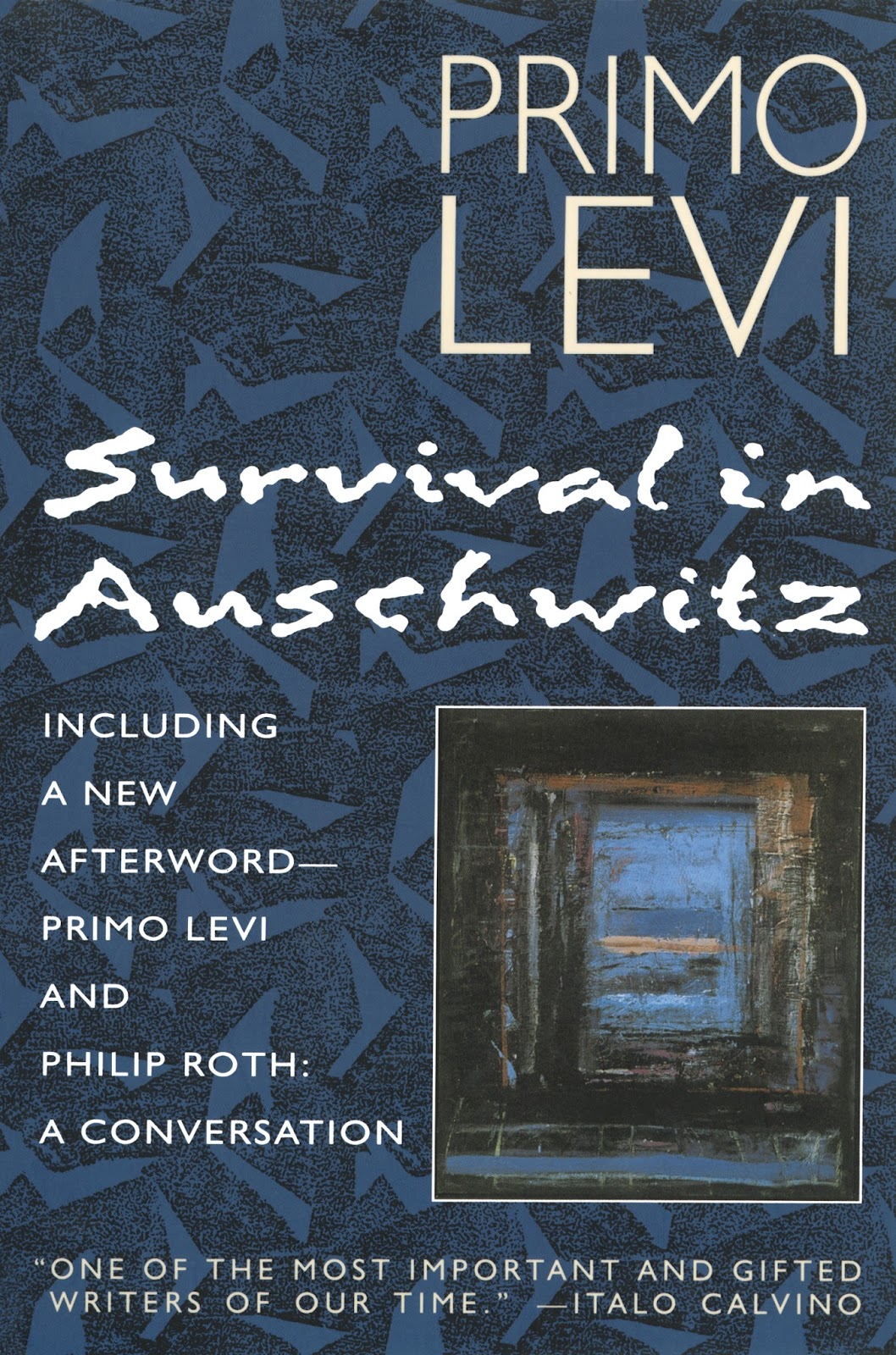
| Survival in Auschwitz, by Primo Levi, originally published in 1947, first English translation published in 1958. |
 |
| Wilson, by A. Scott Berg, 2013. |
 |
| King of the Night: The Life of Johnny Carson, by Laurence Leamer, 1989. |
 |
| Radical Chic & Mau-Mauing the Flak Catchers, by Tom Wolfe, 1970. |
 |
| The Right Stuff, by Tom Wolfe, 1979. |
 |
| The Bonfire of the Vanities, by Tom Wolfe, 1987. |
I read 33 books in 2016, most of which I reviewed on this
blog. Here are my favorites that I read this year. The links will take you to
the full reviews of these books.
Miles Gone By: A Literary Autobiography, by William F. Buckley, Jr. 2004. WFB makes the list
for a second year in a row. Miles Gone By
isn’t a strict autobiography; rather, it’s a collection of autobiographical
writings from throughout Buckley’s long career. Miles Gone By is really about the man behind the politics, and
partisans of either stripe can enjoy Buckley’s wit, joie de vivre, impressive
vocabulary, and generous spirit, all of which are on full display. It’s a
marvelous read, and time spent in the company of the witty, passionate,
intelligent Buckley is always time well spent.
The Storm of War: A New History of the Second World War, by Andrew Roberts, 2011. Roberts also
makes the list for a second year in a row, for his superb overview of World War
II. Roberts brings the conflict to life, and he’s an equally good writer on
military or political matters. His chapter on the Holocaust is superb and
haunting. Roberts is also very strong on the Eastern front, and convincingly
makes the argument that it was Russia who bled the Nazis dry. The Storm of War captures the global
scope and sweep of World War II while still reminding us of the stark tragedies
that each one of the 50 million deaths in that conflict represents.
The Fire Next Time, by James Baldwin, 1963. Baldwin’s searing look at race in America is still
relevant today, more than fifty years after it was written.
Survival in Auschwitz, by Primo Levi, 1947. For anyone wanting to understand more about the
Holocaust, Levi’s eloquent memoir is a superb place to start. Levi was a
prisoner in Auschwitz for more than a year, and in Auschwitz, he saw mankind at
its worst. Levi summed up the entire experience of the Holocaust with this
anecdote:
“Driven by thirst, I eyed a fine icicle outside the window,
within hand’s reach. I opened the window and broke off the icicle but at once a
large, heavy guard prowling outside brutally snatched it away from me. ‘Warum?’
I asked him in my poor German. ‘Hier ist kein warum’ (there is no why here), he
replied, pushing me inside with a shove.” (p.29)
Wilson, by A. Scott Berg, 2013. An excellent cradle to grave biography of our 28th
President. Berg paints a vivid picture of one of our most accomplished
presidents. Wilson’s writings are quoted from liberally, so the reader gets a
vivid sense of his personality.
King of the Night: The Life of Johnny Carson, by Laurence Leamer, 1989. A slight change of pace
from the books listed above. This summer I attempted to learn all that I could
about the enigmatic Johnny Carson. While Carson’s off-camera life was sometimes
quite messy, (he was married four times) on screen he was the personification
of cool, and he always seemed to have the perfect quip at hand. Leamer’s diligently
researched biography is a superb portrait of the Tonight Show host.
Radical Chic and Mau-Mauing the Flak Catchers, by Tom Wolfe, 1970. My new favorite author,
Tom Wolfe, makes the list again, this time for three different books! Radical Chic describes a party that
Leonard Bernstein threw for the Black Panthers at his thirteen-room, two-story,
penthouse duplex. Wolfe’s writing is as sharp as a knife throughout the essay:
“God, what a flood of taboo thoughts runs through one’s head at these Radical
Chic events…But it’s delicious. It is as if one’s nerve endings were on red
alert to the most intimate nuances of status.” Wolfe is always on red alert to
the most intimate nuances of status! That’s his calling card! This is right up
his alley!
The Right Stuff, by Tom Wolfe, 1979. Wolfe’s chronicle of the early U.S. space program is an
engaging look at the Mercury 7 astronauts. Along the way, Wolfe explores the
mythic “right stuff” that test pilots and astronauts must have to remain cool
under pressure. The sections where Wolfe re-creates the astronaut’s Mercury
flights are superb. One of the main figures in the book is the late John Glenn,
who was the most media friendly of the Mercury 7, and was also a strict
moralizer who sometimes clashed with the other astronauts.
The Bonfire of the Vanities, by Tom Wolfe, 1987. Wolfe’s first novel, Bonfire was a massive study of New York City, specifically the
justice system, the one part where different strata of society interacted. Wolfe
captures the zeitgeist of the 1980’s in all its money-lusting glory with the
character of Sherman McCoy, a wealthy bond trader. It’s a marvelous book,
nearly 700 pages long, with 2,343 exclamation points.