Friday, June 21, 2019

Album Review: Paul McCartney and Wings Wild Life (1971)

Album cover of Wild Life, by Wings, 1971.


Paul and Linda McCartney, 1971.
When the Beatles split up in 1970, expectations for Paul McCartney’s solo career were sky-high. But Paul and John Lennon both issued minimalist albums for their proper solo debuts: McCartney, and John Lennon/Plastic Ono Band. It was left to George Harrison to issue the solo album that most fit the mood of the times: the epic, sprawling, triple-disc All Things Must Pass. 

Rock critics probably expected McCartney to make a solo album that was a major statement. What they got instead was the lo-fi weirdness of McCartney, Ram, and Wild Life. McCartney had been a homemade affair, with all the instruments played by Paul. Ram, credited to Paul and his wife Linda, featured a full band and a slightly more polished sound. McCartney’s third solo album, Wild Life, was released in December of 1971, less than seven months after Ram, and was credited to his new band, Wings.

Wait, Paul McCartney was starting a band? After he was just in the Beatles, the greatest band of all-time? Okay, weird. Who was in this new band? A group of rock superstars? Nope, guitarist Denny Laine, and Denny Seiwall on drums. Oh, and Paul’s wife Linda on keyboards and backing vocals. He’s starting a band with his wife? Well, John Lennon was doing the same thing. As I’ve said before, it took guts/stupidity to start a band with a spouse who’s not a professional musician, and Paul and Linda suffered the slings and arrows of the rock critics. 

It’s clear from interviews that it was important to McCartney’s identity to be in a band, rather than just be Paul McCartney, solo artist. Of course, to some degree Wings would inevitably always be “Paul McCartney’s backing band,” but I suspect that being in a band lessened the psychological pressure on McCartney to live up to the huge expectations of making music after the Beatles. 

Wild Life and Red Rose Speedway were both reissued in December of 2018 as part of the ongoing Paul McCartney Archive Collection series. I’ll be reviewing the two-disc version of Wild Life.
Wild Life was a pretty inauspicious debut for Wings, and in my opinion it’s a much weaker album than the superb Ram. Part of the charm of Ram is that even the tossed-off songs, like “Monkberry Moon Delight,” are still awesome, whereas on Wild Life the tossed-off songs just sound, well, tossed-off. Wild Life is a pretty slight album, starting off with the jam “Mumbo” and the repetitive “Bip Bop.” Then we get a cover of “Love is Strange.” While Paul has issued cover albums, it’s extremely rare for him to feature covers in the middle of an album of original material. Like the rest of the album, “Love is Strange” is loose and jammy. 

My two favorite songs on Wild Life are “Tomorrow” and “Dear Friend,” on side two of the album. “Tomorrow” is a very simple song, but it’s catchy as hell, and would be my pick for a single, had one been issued to support Wild Life. (Some copies of “Love is Strange” were issued as a promo single, but the single was never actually released.) “Tomorrow” is a great example of Paul McCartney’s melodic genius, how he can take clichéd lyrics and still turn them into a catchy pop ditty, seemingly at a moment’s notice. 

“Dear Friend” is a stark, haunting piano ballad. Most critics interpreted it at the time as being a response to John Lennon’s venomous song about Paul, “How Do You Sleep?” issued on his Imagine album in September of 1971. However, “Dear Friend” was actually recorded during the Ram sessions, before “How Do You Sleep?” was released. “Dear Friend” has just two verses, and no real chorus or bridge, and it clocks in just shy of six minutes. It’s another example of a song being simple, but still very effective, and quite emotional. “Dear Friend” also features superb vocals from Paul. 

The second disc of Wild Life collects a bunch of previously unreleased home recordings, as well as assorted and sundry rarities. For me, the most interesting home recordings were the two versions of “Dear Friend.” Also of interest is Wings’ 1972 single “Give Ireland Back to the Irish,” which was never issued on an album at the time. The song is McCartney’s response to the events of Bloody Sunday, when British soldiers killed 13 protestors during a march. The song is a rare example of a direct political statement from McCartney. The song was duly banned by the BBC. You can compare and contrast “Give Ireland Back to the Irish” with John Lennon’s own song about Bloody Sunday, “The Luck of the Irish,” which appeared on his 1972 album Some Time in New York City. (Be warned: Yoko sings on it.) 

In my next review, I’ll examine Paul McCartney’s next album, 1973’s Red Rose Speedway.

Wednesday, June 19, 2019

Book Review: Split Season: 1981, by Jeff Katz (2015)

Cover of Split Season: 1981, by Jeff Katz, 2015.


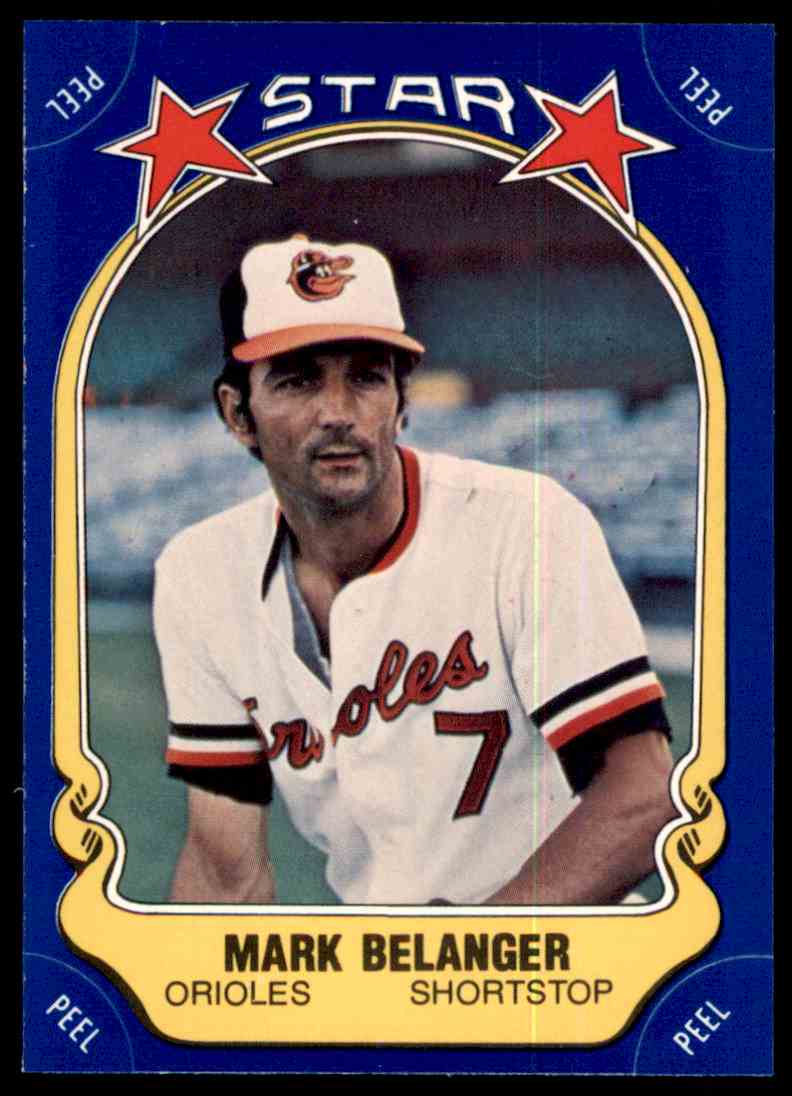
Mark Belanger's 1981 Fleer Star Sticker card. Belanger was a union representative and very involved in the protracted negotiations during the strike. He was also one of the best fielding, and worst hitting, shortstops of all time.

My favorite baseball player, Steve Carlton, had an excellent year in 1981, going 13-4 with a 2.42 ERA and winning his only Gold Glove.
1981 was a difficult year for baseball, as a strike by the players wiped out almost two months of the season. As someone who was born in 1981, it’s always annoyed me that because most teams played around 107 games that year, the stats from my birth year look so paltry. Mike Schmidt led the majors in RBIs with 91—no pitcher won more than 14 games. As a kid flipping through my baseball cards, I would compare players’ stats from 1981 to what they did in other years and inevitably I’d end up disappointed. No one had their best season in 1981. I suppose the silver lining is that the strike was settled in time for the postseason, so there was actually a World Series the year I was born.

Jeff Katz’s 2015 book Split Season: 1981—Fernandomania, the Bronx Zoo, and the Strike that Saved Baseball examines the year in question in great detail. Katz does a fine job recapping the highlights and lowlights of the season. A limitation of the book is that the details of the strike are very complicated and not that interesting. And that’s coming from a baseball fan, so I can’t imagine that many people who aren’t hardcore baseball fans would read this book. Basically, the key issue was that the owners wanted compensation for teams who lost players who signed as free agents with other teams. The players’ union saw that as an attempt to fundamentally weaken the free agent system. The strike was ultimately settled with the owners winning a small concession from the players as a complicated compensation system was adopted. 

When the strike was settled and the 1981 season continued, the dubious decision was made to split the season in two halves: before the strike and after the strike. The teams who were leading their divisions when the strike began were guaranteed a playoff spot, and they would play the winner of the second half of the season. Not surprisingly, with nothing to play for, none of the first half winners also won the second half. This harebrained scheme also ensured that the two teams in the National League with the best records, the St. Louis Cardinals and the Cincinnati Reds, didn’t make the playoffs, because they didn’t win either half of the season. 

Katz is insightful when writing about the four players who were deeply involved in the ongoing negotiations between the players and the owners: catcher Bob Boone, pitcher Steve Rogers, third baseman Doug DeCinces, and shortstop Mark Belanger. Katz interviewed Rogers and DeCinces for his book, and he paints interesting portraits of these four athletes. 

Mark Belanger in particular comes off as a really interesting person. As a baseball player, Belanger is famous for being perhaps the ne plus ultra of a “good field, no hit” shortstop. Belanger played in more than 2,000 games over 18 years, and ended up with a batting average of just .228. However, Belanger won 8 Gold Gloves for fielding excellence, and sabermetric stats paint a picture of him as one of the finest defensive shortstops ever. Baseball-Reference ranks Belanger second all-time in defensive WAR, just ahead of his longtime infield mate, third baseman Brooks Robinson. In a statistic called Total Zone Runs, which I’m not smart enough to attempt to explain, Belanger ranks as the second best defensive shortstop since 1953, behind Ozzie Smith. 

Belanger’s playing career ended after the 1982 season, and after he retired he worked for the players’ union. He died from lung cancer in 1998, at the age of 54. In the 2001 edition of The New Bill James Historical Baseball Abstract, James writes of Belanger’s time working for the union: “He had three books on his desk: a baseball encyclopedia, Marvin Miller’s autobiography, and Don Baylor, by Don Baylor.” (p.624) I don’t know how Bill James knew this, but it’s a fun fact. The first two books make sense to me, but Don Baylor’s autobiography? It seems like a very random choice. However, Belanger and Baylor were teammates on the Orioles from 1970 to 1975, so maybe Belanger enjoyed revisiting his own glory days with the Orioles. I read Don Baylor’s autobiography when I was a little kid and I remember enjoying it, although I couldn’t tell you anything specific about it. It’s never been one of the top three books on my desk.

Katz presents the strike as something of a black and white struggle. It’s very clear he’s on the player’s side, rather than the owners. There’s nothing really wrong with that, but for Katz there cannot be a greedy player or a sympathetic owner, which robs the book of complexity. 

Katz’s book would have improved with stronger editing. Some examples of awkward phrasing and sloppy writing are the following:

“{Bowie} Kuhn came from an immigrant background. Alice Waring Roberts’s family arrived in 1634, sailing from England to Maryland.” (p.23) Well, yes, we’re all immigrants, unless you’re Native American, but did Alice Waring Roberts’s arrival 292 years before Bowie Kuhn’s birth really have much of an impact on how he saw himself?

Katz describes Ted Simmons’ status as a “ten and five” man, meaning that he had been in the majors for ten years, and spent the last five years with the same team. As the St. Louis Cardinals wanted to trade Simmons to the Milwaukee Brewers, Katz writes that Simmons “had control of the situation.” (p.39) What Katz doesn’t tell us is that as a “ten and five” man, Simmons had the right to veto any attempt by the Cardinals to trade him. To understand the control Simmons had in that situation, you need to know that fact, which Katz doesn’t provide. 

There are other passages that are much sharper, such as Katz writing that Cliff Johnson “looked like a giant walrus in cleats.” (p.59) Katz also does well chronicling the larger-than-life personalities of Billy Martin and George Steinbrenner: “Like Steinbrenner, Martin was unaware of irony.” (p.80) So true!

Unfortunately, Split Season: 1981 commits what I consider to be a fundamental error for a non-fiction book: there are no footnotes or endnotes. There’s a bibliography, but there’s no way to tell where quoted material comes from. I really don’t understand why major publishers allow non-fiction books to be published without footnotes or endnotes. I know, the majority of people don’t care, but the omission severely limits the usefulness of a book as a historical document.

Wednesday, June 5, 2019

Book Review: Flamethrowers: Carlton & Gossage, by Bill Gutman (1982)

My copy of Flamethrowers: Carlton & Gossage, by Bill Gutman, 1982. (Photo by Mark C. Taylor)

Why did I recently read the 1982 baseball book Flamethrowers: Carlton & Gossage, by Bill Gutman, when it was probably intended for 6th graders? Well, because Steve Carlton is my favorite baseball player. When I found Flamethrowers in a box of books marked 50 cents at one of my favorite used bookstores, I had to get it. There was a book about Steve Carlton that I didn’t even know about!

As you can tell from the title, Flamethrowers focuses on two pitchers who ended up in the Hall of Fame: Steve Carlton and Rich “Goose” Gossage. Bill Gutman tells us their backstories and takes us through their careers, year by year. Flamethrowers is written well, for what it is, and although I don’t think Gutman interviewed either Steve Carlton or Goose Gossage for the book, he sprinkles it with quotes from newspapers and other sources. (I’m assuming Gutman used other sources, although, not surprisingly, the book lacks either footnotes or a bibliography.) 

The part of the book about Goose Gossage was less interesting to me, so I’ll cover that first. It’s still an interesting overview of Gossage’s career through 1981. Gossage was one of the finest relief pitchers in baseball from 1975-1985, using his wild delivery, overpowering fastball, and Fu Manchu mustache to intimidate batters in late innings. On the subject of mustaches, Al Hrabosky, another Fu Manchu-d reliever from the 1970’s, once said, “How can I intimidate batters if I look like a fucking golf pro?” 

It’s interesting now to read about how Gossage was used in relief, which is very different from how most closers are used today. Nowadays, your closer comes in for the 9th inning, throws some fastballs, and nails down the save. But in Flamethrowers, you’ll read about Gossage coming into games in the 7th or 8th innings! That’s right, closers sometimes used to pitch more than just one inning!

Gossage was part of the craziness that was the New York Yankees during the George Steinbrenner years of the 1970’s and 1980’s. Despite that, Gossage pitched well under pressure on the game’s biggest stages. Minnesota Twins fans like myself will enjoy the references to two of the Yankees’ other relief pitchers of 1981: Ron Davis and George Frazier. Ron Davis was the Twins’ closer from 1982 to 1985, and that time was, um, somewhat tumultuous. I’m pretty sure that Minneapolis Star Tribune columnist Patrick Reusse credits the trade of Davis to the Cubs in August of 1986 as the crucial move that allowed the Twins to triumph in the World Series in 1987. Ironically, George Frazier was one of the players the Twins received from the Cubs for Davis. Frazier set the ignominious record of losing three games in the same World Series for the Yankees in 1981. Fortunately, Frazier emerged unscathed from his one appearance in the 1987 World Series for the Twins.

I learned some new facts about Steve Carlton from Flamethrowers. For example, Gutman writes that Carlton was called up by the Cardinals at the end of the 1964 season, but didn’t pitch in any games. I had never heard this before. 1964 was Carlton’s first professional season, and he quickly rose through the ranks and was promoted to Tulsa, the Cardinals AA farm team. Gutman writes that Carlton warmed up once for the Cardinals in the bullpen, during a high scoring game against the Mets. He even quotes Carlton: “I was so nervous I couldn’t believe it. I began throwing to Dave Ricketts and I couldn’t even see him.” (p.8) 

I’ve never encountered the story of Carlton being called up at the end of 1964, and since the Cardinals were involved in a tight pennant race, which they ended up coming out on top of, I thought it was unlikely they would have called up a 19-year-old pitcher just finishing his first pro season. But I did some Googling to see what I could find. And I found a copy of a major league contract signed by Steve Carlton, dated September 19, 1964. Carlton’s contract was approved by National League President Warren Giles on September 24th. The game that Gutman references where Carlton warmed up, but didn’t actually enter, took place on October 3, 1964. The Mets beat the Cardinals 15-5. The Cardinals used 8 pitchers in the game, so their bullpen was stretched thin. The fact that Carlton signed a major league contract in September of 1964 is proof enough for me that they called him up at the end of the season. 

Steve Carlton is known now for his silence with the media, for his intense and unorthodox physical conditioning program, and for his focus on the mental aspect of baseball. But these characteristics took time to develop, and they were not part of his makeup when he made his major league debut with the Cardinals on April 12, 1965. 

Carlton was clearly a talented young pitcher with a live fastball and an excellent curve, but when he added a slider to his repertoire in 1969, he took his game to the next level and emerged as a truly dominant starting pitcher. Carlton’s slider looked just like his fastball, until it dove downward at the last possible instant. It was a pitch that would confuse hitters for the rest of Carlton’s career. Late in 1969, Carlton set a major league record by striking out 19 New York Mets. (Ironically, Carlton lost the game, 4-3.) 

However, in 1970 Carlton stopped throwing his slider, as it was hurting his arm. He was struggling through a difficult season as the losses piled up. Sometime that season he started getting letters from a fan who thought that Carlton wasn’t focusing his mental energy. Carlton said: “You can create an atmosphere about yourself, positive or negative. The year I lost nineteen games {1970} I was all wrapped up in self-pity. I really learned a lot about mental attitude that year.” (p.23) 

Carlton rebounded from 1970 to become a 20-game winner for the first time in 1971. When he wanted a raise from the Cardinals, the team refused. The difference in dollars between Carlton and the Cardinals was small, but in February, 1972, the team traded him to the lowly Philadelphia Phillies. Carlton was determined to not let this affect his positive mental attitude. Carlton proclaimed days that he started to be “win day,” and in 1972, he was almost always right. Carlton won 27 games for a last-place team that only managed 59 wins, meaning that Carlton was responsible for 45.8% of the Phillies’ wins! Carlton won the pitching Triple Crown, leading the National League in wins, ERA, and strikeouts. He also won the Cy Young Award. Phillies manager Paul Owens said the team performed differently when Carlton was pitching: “It was Steve’s charisma, the feeling of confidence everyone had when he was on the mound.” (p.33)

Expectations were sky-high for Carlton entering the 1973 season. Carlton had done nothing to tamp these expectations down, as he spoke publicly about the possibility of winning 30 games. Instead, he went from a 20-game winner to a 20-game loser, finishing 1973 with an ERA almost two runs higher than 1972, and a record of 13-20. Carlton had walking pneumonia during the season, and although he didn’t spend any time on the disabled list because of that, it couldn’t have helped. The media started being more critical of Carlton during 1973. If he was thinking so positively, why couldn’t he win 30 games? Up to this point in his career, Carlton’s relationship with the press had been largely positive. Now it turned antagonistic. Eventually, as the 1970’s wore on, Carlton stopped talking to the press altogether. Despite what most people have written about Carlton’s silence in the media, it was not absolute, as he still gave occasional interviews during this time. For example, Hal Bodley interviewed him in the 1980-81 off-season for his book about the 1980 Phillies, The Team That Wouldn’t Die. And Carlton would still talk to reporters off the record about subjects other than baseball. But if they tried to wheedle an on the record baseball-related quote from him, Carlton would grin and say, “Policy is policy.” 

1974 and 1975 were two more up-and-down seasons for Carlton, as the Phillies slowly improved. According to Gutman, Carlton was suffering from a sore arm these two seasons. Carlton led the league in strikeouts in 1974, but he also led the league in walks. In 1976 both Carlton and the Phillies exploded, as the Phillies surged to the top of the NL East, and Carlton won 20 games while losing just 7. So, what changed? For Carlton, he started working with Gus Hoefling, a “strength and flexibility expert.” (p.59) Carlton and Hoefling devised an unusual workout strategy that defied much of the conventional logic about how pitchers should train. The thinking was that pitchers should run. A lot. Carlton wasn’t a fan of running, and he was an early proponent of weight lifting, which was not very widespread in baseball in the 1970’s. Carlton also studied martial arts, and some of his training was inspired by martial arts exercises. One of the exercises called for Carlton to stick his left arm in a barrel of rice and work his hand down to the bottom of the barrel. Carlton’s best friend in baseball, the chatty catcher Tim McCarver, said of Lefty’s workouts: “It’s a very strenuous training program. I know because I’ve tried it and it almost killed me.” (p.60) 

My own theory is that Carlton’s career was rejuvenated by his unorthodox training program. After the 1975 season, Carlton’s won-loss record stood at 148-119, for a winning percentage of .554. From 1976 through the 1984 season, Carlton’s record was 165-88, for a winning percentage of .652. I’m not saying wins and losses are the be all and end all for pitchers, and surely part of Carlton’s changing fortunes were due to the Phillies’ improvement as a team over those same years, but I think Carlton’s training helped make him a better pitcher. 

Carlton won the Cy Young Award again in 1977 and 1980. The latter season was one of Carlton’s best, as he led the league in wins and strikeouts, going 24-9 for a Phillies team that finally made it past the NLCS to the World Series. Carlton went 2-0 in the World Series, including the deciding Game 6. Unbeknownst to anyone at the time, in 1980 Carlton put up what will probably be the last 300-inning season a pitcher ever throws. Carlton threw 304 innings in the regular season, and then added another 27 1/3 innings in the postseason! In Game 2 of the World Series, Carlton threw eight innings and 159 pitches. No pitcher would be allowed to do that today. 

The 1981 season saw Carlton add more highlights to his formidable resume, as he became the first left-hander to strike out 3,000 batters, and he also surpassed Bob Gibson’s record for most strikeouts in the National League. And that’s where Flamethrowers leaves Steve Carlton, a 37-year-old power pitcher whose slider was still one of the best pitches in baseball. 

Carlton had another great season in 1982, as he became the first pitcher to win four Cy Young Awards, leading the league in pretty much everything: wins, games started, complete games, shutouts, innings pitched, strikeouts—as well as most hits allowed. In 1983 Carlton won his 300th game, led the league in strikeouts and innings, and helped the Phillies make it back to the World Series. In 1983 and 1984 Carlton and Nolan Ryan traded off the title of all-time strikeout leader. Carlton went on the disabled list for the first time in his career in 1985 with rotator cuff issues. He wasn’t the same pitcher after that, although he persisted with his positive mental outlook, even as he bounced from team to team. He recorded his 4,000th strikeout with the San Francisco Giants in 1986, which is still the National League record. Carlton pitched his last game for the Minnesota Twins in 1988, finishing his career with 329 wins. Carlton was a first-ballot Hall of Famer in 1994. 

If you’re really, really obsessed with either Steve Carlton or Goose Gossage, or baseball in the 1970’s, then I can heartily recommend Flamethrowers to you.

Monday, May 20, 2019

Book Review: F. Scott Fitzgerald in Minnesota: The Writer & His Friends at Home, by Dave Page, Photographs by Jeff Krueger (2017)

Fitzgerald historian Dave Page, author of F. Scott Fitzgerald in Minnesota: The Writer & His Friends at Home, 2017.


Photographer Jeff Krueger.
I’m a big fan of F. Scott Fitzgerald, and I give Fitzgerald walking tours of the Saint Paul neighborhood he lived in. The more I read by and about Fitzgerald, the more intrigued I am by this man who wrote such fantastic prose. 

In 2017’s F. Scott Fitzgerald in Minnesota: The Writer & His Friends at Home, author Dave Page has produced the essential work about Fitzgerald’s life in Minnesota. Page has written about Fitzgerald before: in the 1996 book F. Scott Fitzgerald in Minnesota: Toward the Summit, co-written with John J. Koblas, in the notes he wrote for the 2004 collection The St. Paul Stories of F. Scott Fitzgerald, which he co-edited, and in his perceptive Introduction and Afterword to the 2013 re-printing of The Thoughtbook of F. Scott Fitzgerald, a teenage diary that Fitzgerald kept. 

F. Scott Fitzgerald in Minnesota: The Writer & His Friends at Home is beautifully illustrated with photographs by Jeff Krueger, who has done a fantastic job at capturing the essence of Fitzgerald’s neighborhood. There are also period photos of some of the houses and buildings, as well as newspaper clippings about Fitzgerald and his friends. 

F. Scott Fitzgerald in Minnesota: The Writer & His Friends at Home was published by Fitzgerald in Saint Paul, a non-profit organization dedicated to “celebrating the life and literature of F. Scott Fitzgerald.” The organization was started by an endowment from Richard McDermott, who lived in Fitzgerald’s birthplace for almost forty years. 

Throughout the book, Page reminds us of Fitzgerald’s place in the Saint Paul society of his adolescence and young adulthood—he was not merely on the fringes of the Saint Paul elite, he was among the elite. Scott’s family was prominent enough in Saint Paul that when he visited Europe for the first time in 1921, the Archbishop of Saint Paul wrote him a letter of introduction to the Pope! (Despite the kind words from the Archbishop, Scott and Zelda did not meet the Pontiff.) Fitzgerald sometimes exaggerated his stories, as when he expressed his fear that his family would have to go to the poorhouse after his father lost his job in 1908. Page cuts through those misconceptions to give us a portrait of Fitzgerald as he truly was—someone born into a prominent family of some means, but who would also have to work for a living. 

Fitzgerald was an insider who could also project himself to be an outsider. There’s a beautiful passage in The Great Gatsby where Nick Carraway does exactly that. He’s at a party with Tom Buchanan and Myrtle Wilson:

“Yet high over the city our line of yellow windows must have contributed their share of human secrecy to the casual watcher in the darkening streets, and I was him too, looking up and wondering. I was within and without, simultaneously enchanted and repelled by the inexhaustible variety of life.” (p.40) 

I suspect that it must have been that way for Fitzgerald in his own life—at the same time he was experiencing something, there was part of his brain that was cataloguing it, storing it for later, gathering information and scenes that would later inform his fiction. 

Page has done his homework, and he uncovers tidbits that other Fitzgerald historians have not. For example, it’s sometimes stated that Scott’s two older sisters died in an epidemic, which makes it sound as though they died close together. As Page shows, they actually died seven months apart. Sure, that fact by itself probably doesn’t mean much to all but the most devoted Fitzgerald aficionados, but my point is that Page is dispelling myths, and the more myths we can dispel, the more accurate we can be about Fitzgerald’s life. Numerous biographies repeat the story that Scott’s sisters died in an epidemic, and once an error like that appears in print, it can multiply indefinitely, as the book then becomes the source for others. 

Sprinkled throughout the book are insights into Fitzgerald from his childhood friends and contemporaries. Bob Clark gives us a sense of Scott’s charm: “He absolutely charmed the older women. My mother thought he was great…he absolutely charmed you when he was talking to you, as if you were the most interesting person in the world.” (p.139) 

There’s a lovely quote from Scott’s aunt, thanking him for his letter after the sudden death of his uncle: “…nothing touched me so much as your beautiful telegram & letter. I read them over & over and will always keep them. Father Barron said, ‘No one but Scott could have written that.’” (p.152) 

F. Scott Fitzgerald in Minnesota: The Writer & His Friends at Home will give great pleasure to passionate Fitzgerald fans who want to know more about his life in Minnesota, and how Saint Paul impacted his life and work. It will also no doubt give enjoyment to those not deeply immersed in Fitzgerald’s life and work as a beautiful visual record of the Saint Paul neighborhood that he called home.